At The Botanist, we see the same moment of confusion all the time. Someone picks up a jar of flower, reads the label, and says, “Wait, why does this say THCA 24% but THC 0.3%? Is this weak, or is it strong?” If you have ever felt like the numbers on cannabis packaging were written in a different language, you are not alone.
The short answer is that THCA is the natural, raw form of THC in the cannabis plant, and THC is what you get after heat transforms THCA. That transformation is why you can have a product that looks like it has almost no THC on the label, yet still produces a very traditional THC experience when smoked, vaped, or cooked.
Once you understand the difference, labels start making sense. You shop more confidently. You compare products more accurately. You avoid accidental “too much” experiences. And you stop getting tricked by a single line item on a lab report.
What is THC?
THC, short for delta-9-tetrahydrocannabinol, is the cannabinoid most people associate with the classic cannabis “high.” It is the primary psychoactive cannabinoid in cannabis, and the one most associated with the classic “high.”
On product labels, THC is often listed as “Δ9-THC” or “Delta-9 THC,” especially in lab reports. In many finished products like vape oil, edibles, and tinctures, a larger portion of the THC may already be in its active form because the product has been heated or processed during manufacturing.
What is THCA?
THCA is tetrahydrocannabinolic acid. It is the precursor to THC, meaning it is what the plant produces before heat changes it. In raw, freshly harvested cannabis, THCA is typically the dominant form, not THC. Many education sources describe THCA as the non-intoxicating acidic form of THC found in raw cannabis.
That “A” at the end matters. It stands for “acid.” THCA has an extra carboxyl group that changes how it interacts with your body. In simple terms, THCA in raw form does not behave like active THC in the brain the same way once it is heated.
The key process: decarboxylation
The reason THC and THCA cause so much label confusion is one scientific process: decarboxylation.
When cannabis is exposed to heat, THCA loses a part of its molecular structure (released as CO₂) and becomes THC. This can happen through:
- Smoking
- Vaping
- Cooking and baking (like when making edibles)
- Certain manufacturing processes that heat or activate cannabinoids
Decarboxylation is the bridge between THCA on the label and THC in your experience. A widely used consumer guide on decarboxylation explains that heating cannabis activates cannabinoids, and gives common temperature ranges used for decarbing flower for edibles.
Why the “0.877” number shows up everywhere
If you have ever seen people talk about “multiply THCA by 0.877,” that is not internet folklore. It is part of how many labs and regulators calculate Total THC.
When THCA converts to THC, the molecule loses mass because that CO₂ leaves the structure. So the maximum theoretical THC you can get from THCA is about 87.7% of the THCA amount by weight. That is where the 0.877 factor comes from.
Many programs and agencies use the standard formula:
Total THC = (THCA × 0.877) + THC
You will see this exact formula in state cannabis guidance and in federal hemp regulations.
The USDA hemp program also references using post-decarboxylation or similarly reliable methods to determine total THC for testing.
At The Botanist dispensaries, we like to explain it this way: THCA is potential THC. Total THC is an estimate of what that potential becomes after heat.
Why labels often show both THCA and THC
Here is what is happening on most flower labels and COAs (Certificates of Analysis):
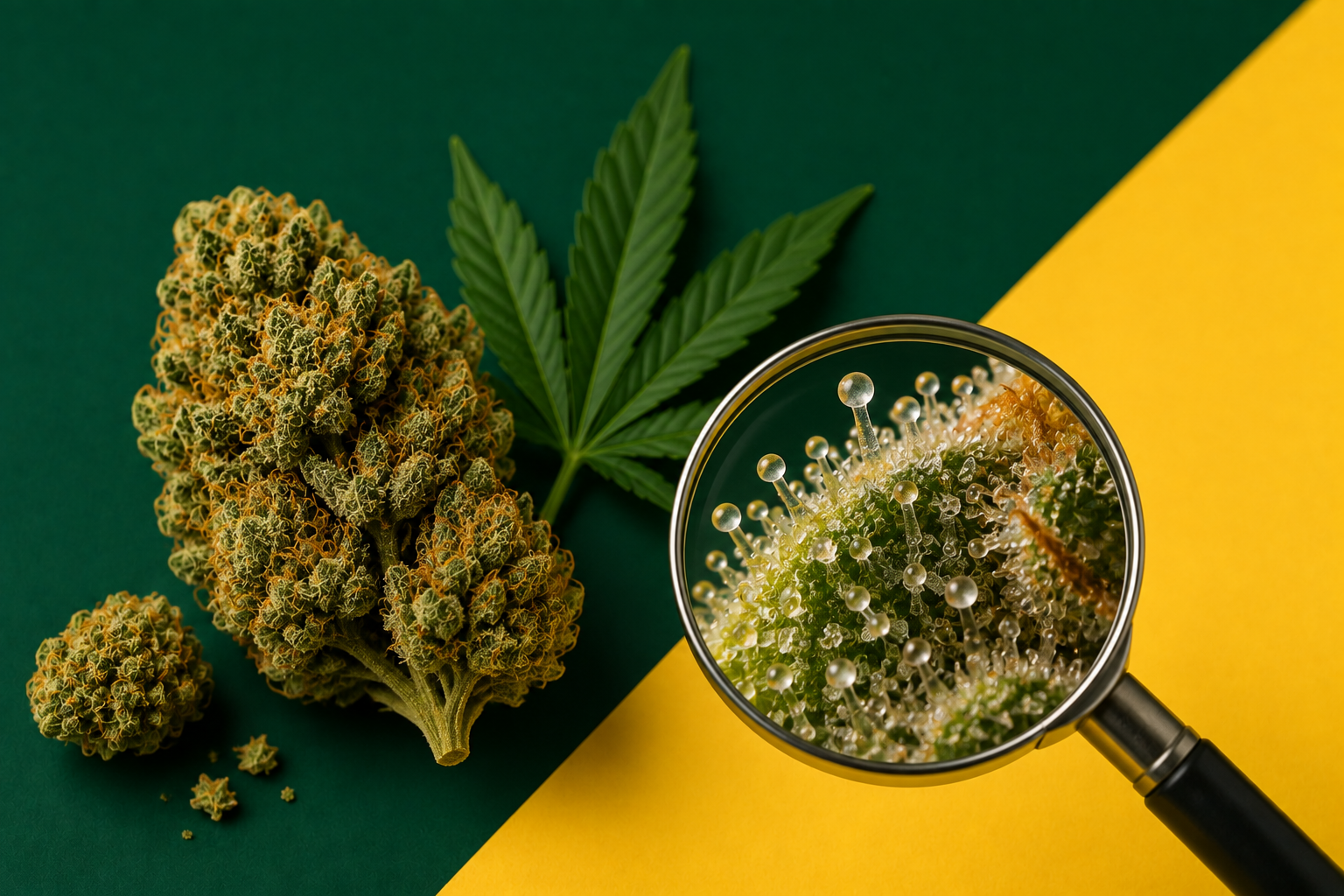
- THCA will usually be high because flower naturally contains THCA in the trichomes.
- THC (Delta-9 THC) will often be low because the flower has not been heated yet.
This is normal. It does not mean the flower is weak. It means the flower is unactivated until you apply heat.
A common misunderstanding is that “THC is the only number that matters.” If you only look at the delta-9 THC line on flower, you can mistakenly think the product is low potency, even though it can convert into a typical THC experience once consumed. That is exactly why many labels include Total THC.
A simple example that makes it click
Let’s say a flower label shows:
- THCA: 20%
- THC: 1%
Estimated Total THC would be:
(20 × 0.877) + 1 = 17.54 + 1 = 18.54% Total THC
So that flower is not “1% THC” in the way most people mean it. It is closer to 18.5% Total THC potential.
This is also why two jars can look confusing if one brand lists Total THC prominently and another shows THCA and THC separately. They are often describing the same reality with different formatting.
Why it matters for your experience
Understanding THC vs THCA is not just trivia. It changes how you shop and how you dose.
1) It helps you compare flower more accurately
Flower potency discussions are often really Total THC discussions. If you want to compare flower to flower, Total THC is usually the most useful single number. It is still not the whole story, because terpenes and minor cannabinoids shape the “character” of the experience, but it is a better comparison point than the delta-9 THC line alone.
2) It explains why different product types list different THC numbers
Vape oils and many edibles often show higher active THC because the cannabinoids are already activated during processing. That is why vape oil COAs often look different than flower COAs.
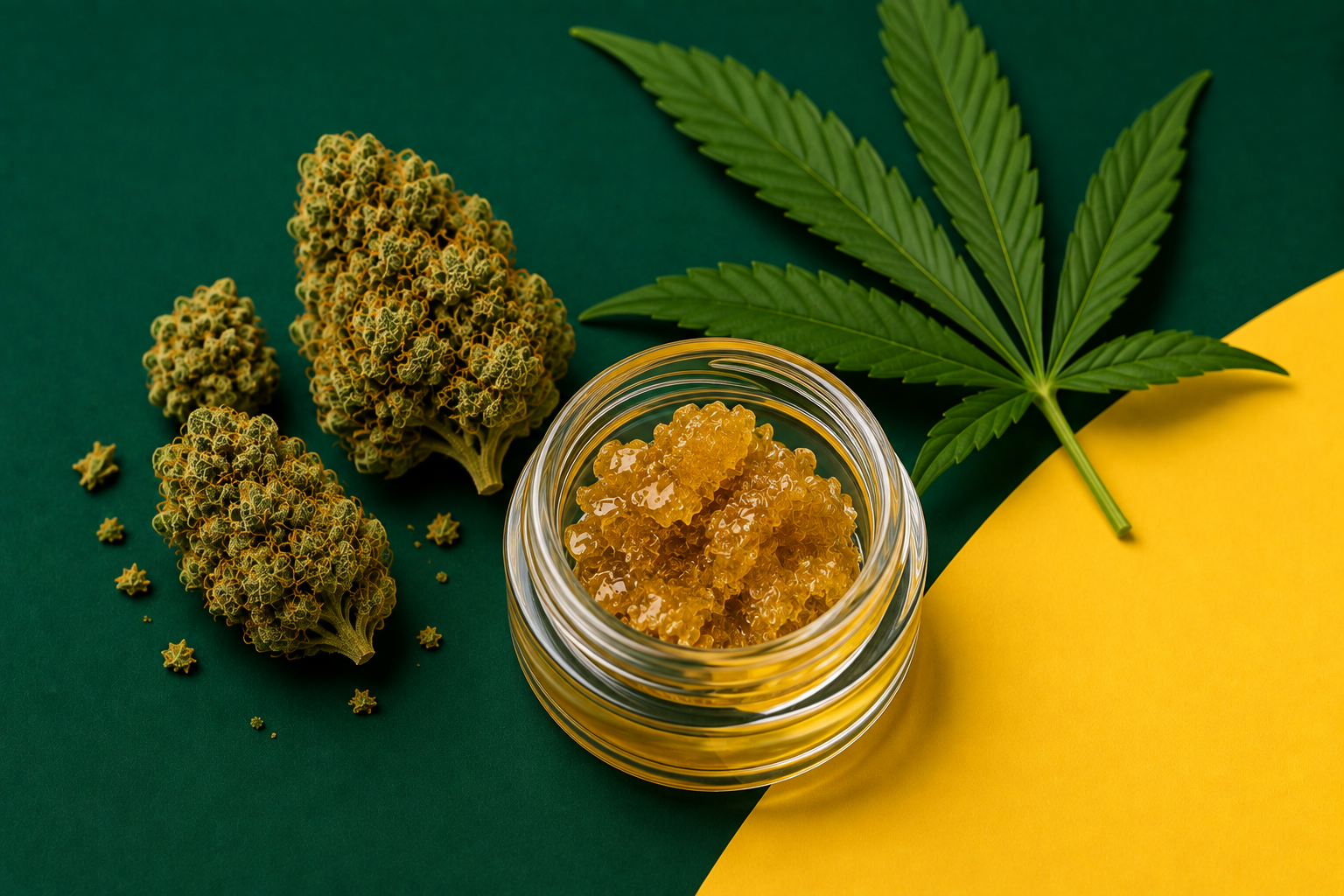
Some concentrates are rich in THCA (for example, certain crystalline or “diamonds” products). Those products can look like “THCA” on the label, but when you dab them or otherwise apply heat, they convert quickly to THC.
3) It helps you avoid accidental overconsumption
Newer consumers sometimes look at a flower label, see a low delta-9 THC line, and assume the product will be mild. Then they smoke or vape it, and the actual potency is much higher than the label suggested.
Knowing that THCA converts to THC helps you dose more realistically. A small change in consumption can make a big difference, especially with higher Total THC flower or concentrates.
Decarboxylation in real life is not perfectly efficient
The Total THC calculation is a useful estimate, but real life is messier.
Regulators have noted that the total THC formula represents a maximum theoretical conversion, essentially assuming full conversion efficiency.
In practice, not all THCA converts perfectly to THC during use. There are losses from combustion, temperature variation, and how your device heats the material. That is one reason a Total THC number is not the same thing as “exactly how high you will feel.” It is a potency guide, not a guarantee.
Is THCA the Same as THC Once You Consume It?
In raw form, THCA is generally described as non-psychoactive.
But here is the practical reality: most common consumption methods involve heat. Smoking, vaping, dabbing, and cooking all convert THCA to THC. So when someone says “THCA flower,” it still converts to standard THC once you consume it in a heated way.
If you are using cannabis in a way that does not involve heat (for example, certain raw preparations), that is where THCA may remain THCA. That is a niche use case compared to typical dispensary consumption patterns.
THC vs THCA and the “hemp loophole” conversation
Even if you are shopping in a state-licensed dispensary, you have probably heard about THCA in the broader market, especially online.
Historically, the 2018 Farm Bill defined hemp by a threshold based on delta-9 THC concentration, which contributed to a marketplace where some flower could test low in delta-9 THC while still being high in THCA. Meanwhile, federal hemp production rules and testing frameworks reference total THC calculations (including the 0.877 THCA conversion) for determining compliance.
In 2025, there was significant public reporting that regulators and lawmakers were moving to tighten rules around intoxicating hemp-derived products, with proposals aimed at closing perceived loopholes and addressing product safety and access concerns.
We are not a legal authority, and laws vary widely by state and continue to change. What matters for you as a consumer is this: THCA and Total THC have become part of mainstream labeling and regulation conversations, which is another reason you are seeing them more often on packaging and COAs.
Why The Botanist staff cares about this distinction
At The Botanist, we do not want you shopping with half the information. THC vs THCA knowledge helps us do three things better for you.
First, it lets us translate labels into real-life expectations. If you tell us you want a lower-potency product, we can help you avoid high Total THC products, even if the delta-9 line looks small.
Second, it helps us guide you across product types. Flower, vapes, concentrates, tinctures, and edibles can all present potency differently. Understanding activation helps you move between those categories without surprises.
Third, it helps you get consistent. Once you know how to read Total THC, you can track what worked for you and replicate it more easily.
What to look at on the label when you are comparing products
If you want to keep it simple, here is what we usually recommend focusing on when you are shopping:
For flower: Look for Total THC when it is provided, or mentally translate THCA using the idea that THCA converts at about 0.877 into THC.
For vapes and edibles: Look for milligrams of THC per serving, because that is a more direct dose measurement.
For concentrates: Notice whether the product is listed as THC, THCA, or both, and remember that dabbing or vaping converts THCA rapidly through heat.
Then, once potency makes sense, you can do the next important step: consider terpene profile, which shapes the aroma and flavor character of the product.
A quick note on decarbing at home
Some customers ask about decarboxylation because they want to make edibles or infusions. The basic concept is that low, steady heat over time converts THCA to THC, and many guides recommend staying in a moderate temperature range to preserve more cannabinoids and terpenes.
If you are making edibles at home, start with conservative dosing. It is easy to take too much when you are working with activated material, and edible onset is delayed.
If you only remember one thing
When you see THCA on a label, do not assume it is weak. In most common use methods, THCA is simply THC that has not been activated yet. Total THC is the bridge between the chemistry on paper and the experience in your body.
If you ever want help interpreting a label or a COA, that is exactly what we do at The Botanist. Tell us how you plan to consume it and what potency range you’re comfortable with, and we will help you match the numbers to a product that makes sense.