Two jars labeled with the exact same strain name can come from plants that are, genetically speaking, only distant cousins. That’s a direct result of how cannabis breeding works, and it’s one of the most common sources of confusion for anyone trying to make sense of a dispensary menu. The indica and sativa labels printed on packaging suggest a tidy, two-category system, but the reality underneath those words is a lot more complicated and a lot more interesting.
Understanding cannabis genetics and breeding doesn’t require a biology background. It requires knowing a handful of concepts, like what a phenotype actually is, how breeders combine plants to create something new, and why a landrace strain is fundamentally different from the hybrid next to it on the shelf. Once those pieces click into place, a dispensary menu stops looking like a list of brand names and starts looking like what it actually is: a record of genetic history.
Why Two Plants With the Same Strain Name Can Look Different
Every cannabis plant carries a genetic blueprint called a genotype: the complete set of genetic instructions passed down from its parent plants. But a genotype alone doesn’t determine everything about how a plant turns out. The observable traits that actually show up- plant height, leaf shape, bud density, coloration, aroma compounds, and cannabinoid ratios, make up what’s called the phenotype. The distinction between cannabis phenotype vs genotype matters because the same genotype can express itself differently depending on the environment it’s grown in.
Light exposure, temperature, humidity, soil composition, and even harvest timing can all shift how a genotype expresses itself. This is why a grower might select several plants grown from seeds of the same cross, then choose to continue growing only one or two because their phenotypes expressed traits closest to what the breeder was aiming for. That selected plant, once cloned and grown consistently, becomes the version of a strain most people encounter under a given name.
A different grower working from the same genetic line, in a different environment, might end up with a noticeably different phenotype, which explains why the same strain name doesn’t always mean an identical plant.
How Are Cannabis Strains Created? The Basics of Breeding
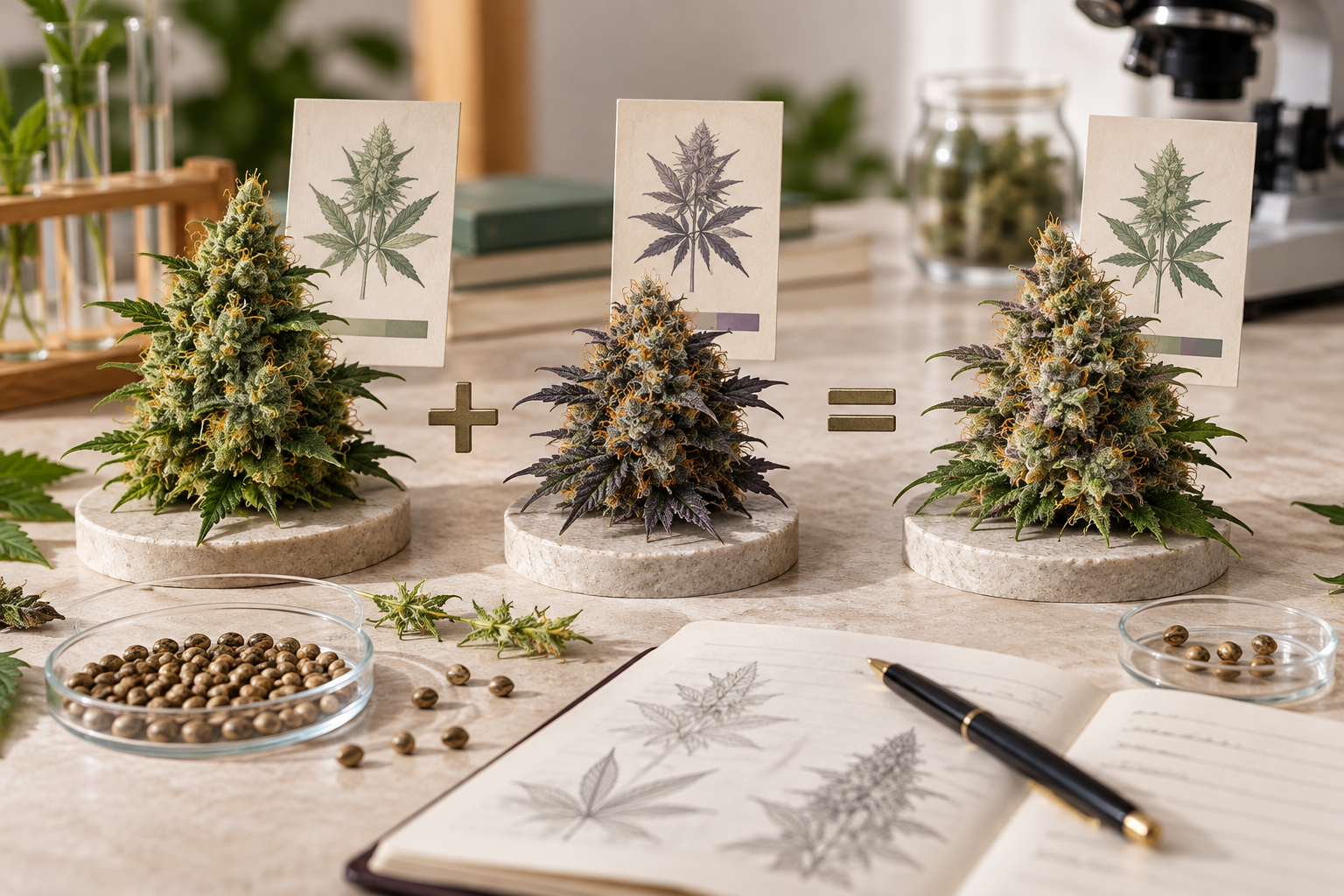
At its core, cannabis breeding works the same way plant breeding has worked for centuries in agriculture: select two parent plants with traits you want to combine, cross them, and evaluate the offspring. Cannabis is naturally dioecious, meaning individual plants are either male or female, which makes controlled breeding relatively straightforward compared to species where each plant carries both types of reproductive structures.
Selecting Parent Plants
A breeder starts by choosing a mother plant and a father plant based on specific traits worth passing along, things like cannabinoid ratios, terpene composition, flowering time, disease resistance, or yield potential. This selection process is really the foundation of the entire practice of cannabis genetics and breeding, since the traits present in the parent plants set the boundaries for what the offspring can possibly express.
A breeder working with two plants that both carry genes for a short flowering cycle, for example, is far more likely to produce offspring with that same trait than one working from parents with no shared genetic tendency in that direction.
Pollination and Seed Production
Once breeders select parent plants, they collect the male plant’s pollen and apply it to the female plant’s flowers, a process they can control precisely indoors to avoid unwanted cross-pollination from other plants.
The pollinated female then produces seeds, and each seed carries a unique combination of genetic material from both parents. This matters because even seeds from the same pollination event aren’t identical.
Genetic recombination means every seed is its own unique cross, which is why breeders typically grow out dozens or even hundreds of seeds from a single cross before deciding which individual plants are worth continuing to work with.
Indica vs Sativa Genetics: What the Labels Really Describe
The indica and sativa classification system originated to describe observable plant structure, not a chemical or genetic dividing line.
Sativa-type plants, historically associated with equatorial growing regions, tend to grow taller with longer internodal spacing and narrower leaves, along with longer flowering cycles.
Indica-type plants, historically associated with mountainous regions with harsher, shorter growing seasons, tend to grow shorter and bushier with wider leaves and faster flowering times.
Modern genetic research has complicated this picture considerably. A genome-wide sequencing study published in PLOS ONE found that a plant’s chemical profile, meaning its cannabinoid and terpene composition, doesn’t reliably track with whether it’s labeled indica or sativa on a dispensary shelf.
Decades of crossbreeding have mixed genetic lines so extensively that a plant labeled “indica” today might share more genetic material with a sativa-leaning ancestor than an actual indica landrace strain.
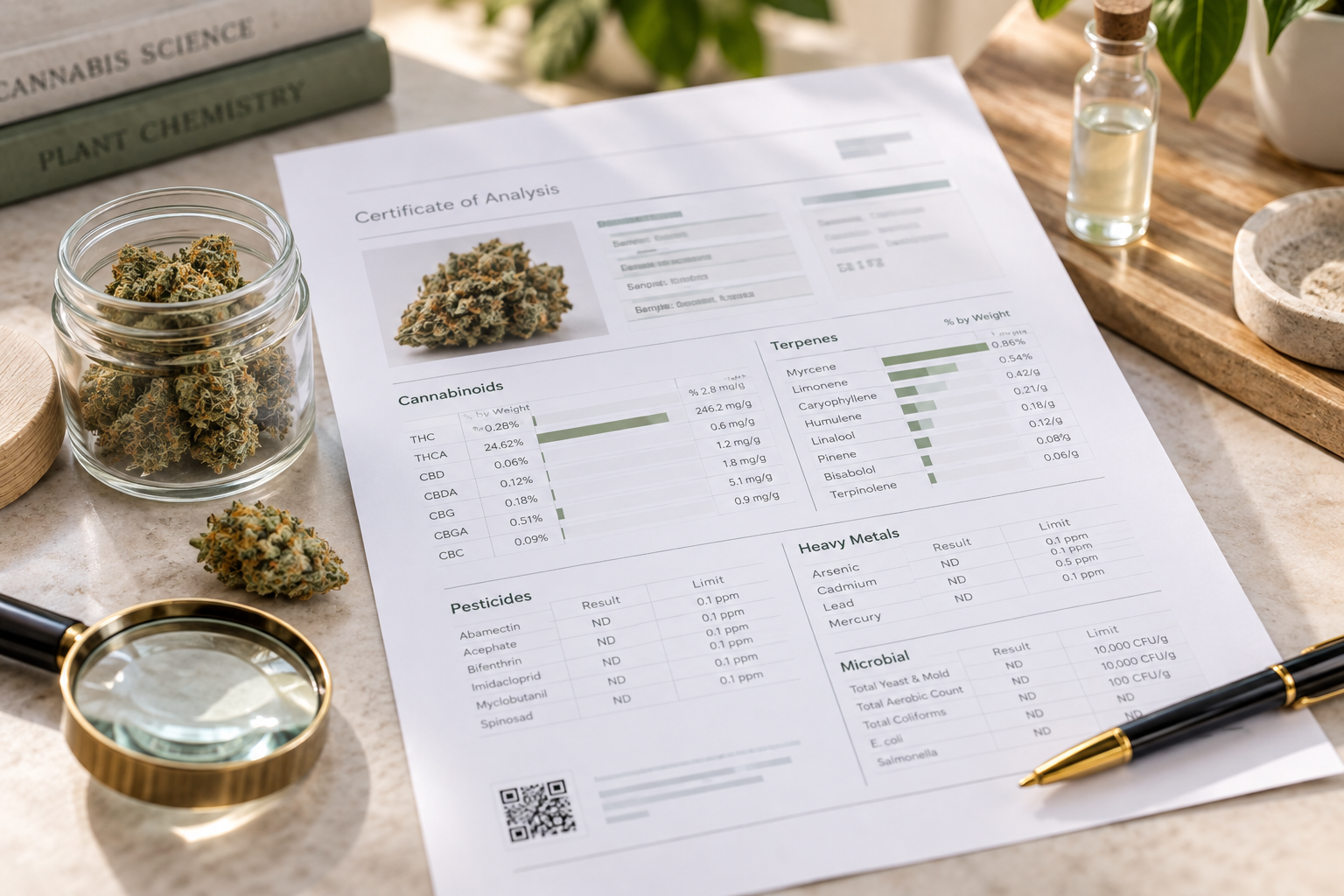
For that reason, many cultivators and researchers now treat indica and sativa primarily as descriptions of plant morphology and growth pattern, while relying on lab-tested cannabinoid and terpene data to describe a product’s actual chemical makeup.
Cannabis Landrace Strains: The Genetic Foundation of Everything Else
Every hybrid on a modern dispensary shelf traces its ancestry back to landrace strains, which are cannabis populations that developed in specific geographic regions over long stretches of time, largely isolated from other cannabis populations. Because they evolved in isolation, landrace strains adapted very specifically to their local climate and developed genetically stable, consistent traits generation after generation.
Well-documented landrace strains include Hindu Kush, which developed in the mountainous regions of Afghanistan and Pakistan, and Durban Poison, which developed in South Africa’s warmer climate. These two examples illustrate the morphological range within landrace genetics well.
Hindu Kush plants grow compact and bushy with a shorter flowering cycle suited to a shorter growing season, while Durban Poison plants grow tall with a longer flowering cycle suited to a longer, warmer season. A large-scale genome sequencing study published in Science Advances traced this ancestry back further still, tracking present-day hemp and drug-type cultivars to a common gene pool tied to early Neolithic domestication in East Asia.
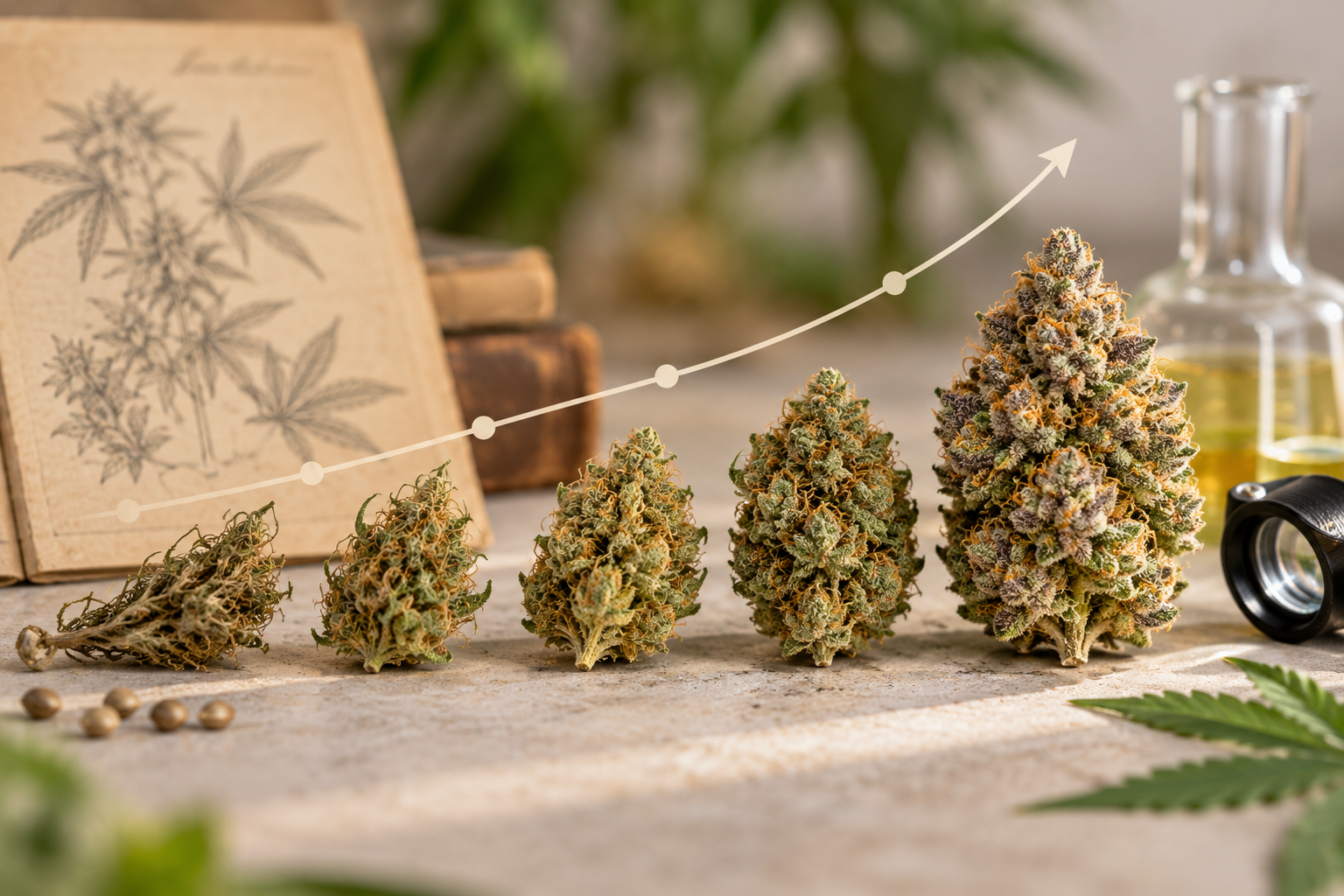
Breeders in the 1960s and 1970s began collecting landrace genetics from around the world and crossing them, which is the starting point for nearly every hybrid strain available today. Because so much crossbreeding has occurred since then, true landrace genetics are increasingly rare, and seed preservation projects now exist specifically to keep original landrace lines from disappearing entirely.
How Cannabis Hybrid Strains Are Made
A hybrid strain is simply the result of crossing two genetically distinct parent plants, whether that’s two landraces, two existing hybrids, or a landrace crossed with a hybrid.
Most modern breeding programs aim to combine desirable traits from each parent, such as pairing a plant known for a particular terpene profile with one known for disease resistance or a shorter flowering time.
The process of making cannabis hybrid strains typically happens over several generations rather than in a single cross. A breeder makes an initial cross, grows out the resulting seeds, selects the individual plants that best express the combination of traits they’re after, and then often crosses those selections again to reinforce those traits further.
This is a big part of why some hybrid strains take years to develop before they’re considered stable and ready for wider release. A cross that looks promising in its first generation can still show significant variation among individual plants, and it takes repeated selection to narrow that variation down.
What Does F1 Mean in Cannabis Breeding?
F1 stands for “filial generation one,” and it refers to the direct offspring of two distinct parent plants in their very first cross. F1 cannabis genetics are notable because, when both parent plants come from stable, consistent genetic lines, the F1 offspring tend to show a trait called hybrid vigor, meaning the offspring often grow more vigorously and uniformly than either parent individually. This happens because crossing two distinct genetic lines can mask recessive traits that might otherwise limit growth or yield.
Breeders who work with true F1 genetics can offer growers a level of predictability that later, more mixed generations often can’t match, since F1 seeds from the same stable parent lines tend to grow into remarkably similar plants.
This differs from F2 seeds, which come from crossing two F1 plants, a process that reintroduces more genetic variation and produces offspring with a wider range of traits. Breeders who want a stable, reliably reproducible strain typically need to work through several additional generations beyond F1 before that variation narrows back down.
Clones vs Seeds: Two Different Ways to Grow the Same Genetics
Seeds and clones represent two fundamentally different approaches to working with cannabis genetics, and the difference matters for anyone trying to understand why the same strain name can show up in slightly different forms.
A seed-grown plant is the result of sexual reproduction, meaning it carries a unique genetic combination from two parent plants, even if that combination falls within a narrow, well-established range.
A clone, on the other hand, is a cutting taken directly from an existing plant, which means it’s genetically identical to its source plant. No genetic recombination is involved.
This is why commercial cultivators who want a highly consistent, repeatable product often rely on clones taken from a single, proven “mother” plant rather than growing every batch from seed.
A dispensary product made from cloned genetics should, in theory, express the same phenotype batch after batch, assuming growing conditions stay consistent, while seed-grown plants of the same strain name can show more natural variation from one plant to the next.
How Breeders Stabilize a New Cannabis Strain
Stabilizing a strain means narrowing down its genetic variation until the vast majority of seeds from that line grow into plants with consistent, predictable traits. This process, sometimes called backcrossing or inbreeding depending on the specific technique, involves repeatedly crossing selected offspring back with a parent or with each other over several generations, each time selecting only the plants that most closely match the target traits.
It’s a slow process by design. Rushing stabilization tends to produce a strain that still shows wide variation between individual plants, which defeats the purpose of giving it a consistent name in the first place.
A genuinely stabilized strain, sometimes labeled with terms like “IBL” for inbred line, represents years of a breeder’s selection work condensed into a single, dependable set of seeds.
Reading a Menu With Genetics in Mind
Cannabis genetics and breeding is a deep field, and professional breeders spend entire careers working within it, but the basics go a long way toward making a dispensary shelf easier to read. Knowing the difference between a phenotype and a genotype, understanding what F1 actually signals about predictability, and recognizing that indica and sativa describe plant structure more than anything else all add up to a genuinely more informed way of browsing.
The genetics behind a strain shaped every stage of that plant’s life long before it reached a jar, and that history is worth knowing even if all you’re doing is picking something off a shelf.