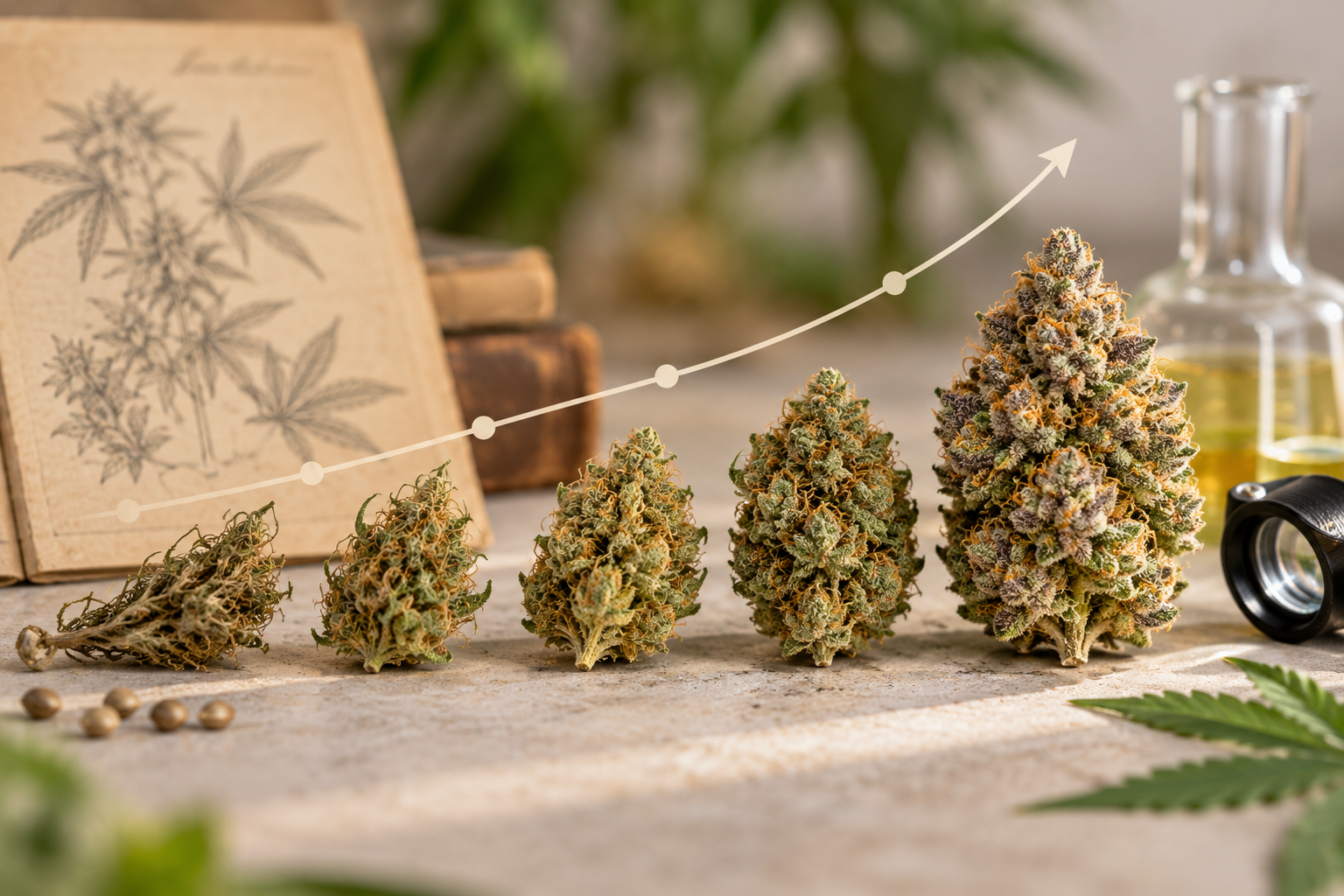
A gram of cannabis confiscated in the mid-1990s averaged under 4 percent THC. A gram tested today averages closer to 16 percent, according to decades of federal potency monitoring data. That’s not a small shift. It’s roughly a fourfold increase in measured potency across less than thirty years, and it explains why so many people who set cannabis aside in the 1990s or early 2000s and picked it back up recently walk into a dispensary feeling like they’re looking at an entirely different plant.
Why cannabis potency has increased isn’t a mystery, and it isn’t the result of any single change. It’s the product of decades of overlapping shifts in botany, cultivation technology, market economics, and consumer preference, each one reinforcing the others.
Understanding those forces makes a modern THC percentage on a label a lot easier to interpret, whether you’re new to cannabis, coming back to it after years away, or just curious about how the plant got here.
What Was the Average THC Percentage in the 1970s?
Early potency-monitoring data from the 1970s generally placed the THC content of seized cannabis in the low single digits. Some commonly cited estimates range from 1%–2%, although historical figures vary because samples, testing methods, and storage conditions were not always consistent.
Much of the cannabis flower available at the time also contained seeds. Sinsemilla cultivation — growing female plants without pollination — was not yet standard across the market. Preventing pollination allowed plants to produce larger, more resinous, seedless flowers, while selective breeding and improved cultivation methods further increased potency. Together, those changes help explain why cannabis became substantially stronger over the following decades.
The Shift From Seeded Marijuana to Sinsemilla
Sinsemilla, a term that comes from the Spanish phrase for “without seed,” refers to cannabis flower grown from female plants that were never pollinated. Unpollinated female plants continue producing resin in an attempt to catch pollen, which means sinsemilla flower carries a much higher concentration of resin, and therefore cannabinoids, than seeded flower from the same genetic stock.
Researchers examining historical potency data have identified the growing market share of sinsemilla, along with selective breeding and improved cultivation practices, as important factors behind the increase in cannabis potency documented from the 1990s onward.
Before sinsemilla cultivation became widespread, much cannabis flower was pollinated and contained seeds. Because seeds add weight without contributing significant amounts of cannabinoids, seeded material could have a lower THC concentration by weight than seedless, resin-rich flowers. The shift toward unpollinated female plants therefore helped raise the measured potency of the harvested product—but it was only part of the story. Breeding plants for higher THC content and advances in cultivation also played major roles.
Cannabis Breeding and Potency: How Selective Breeding Changed the Plant
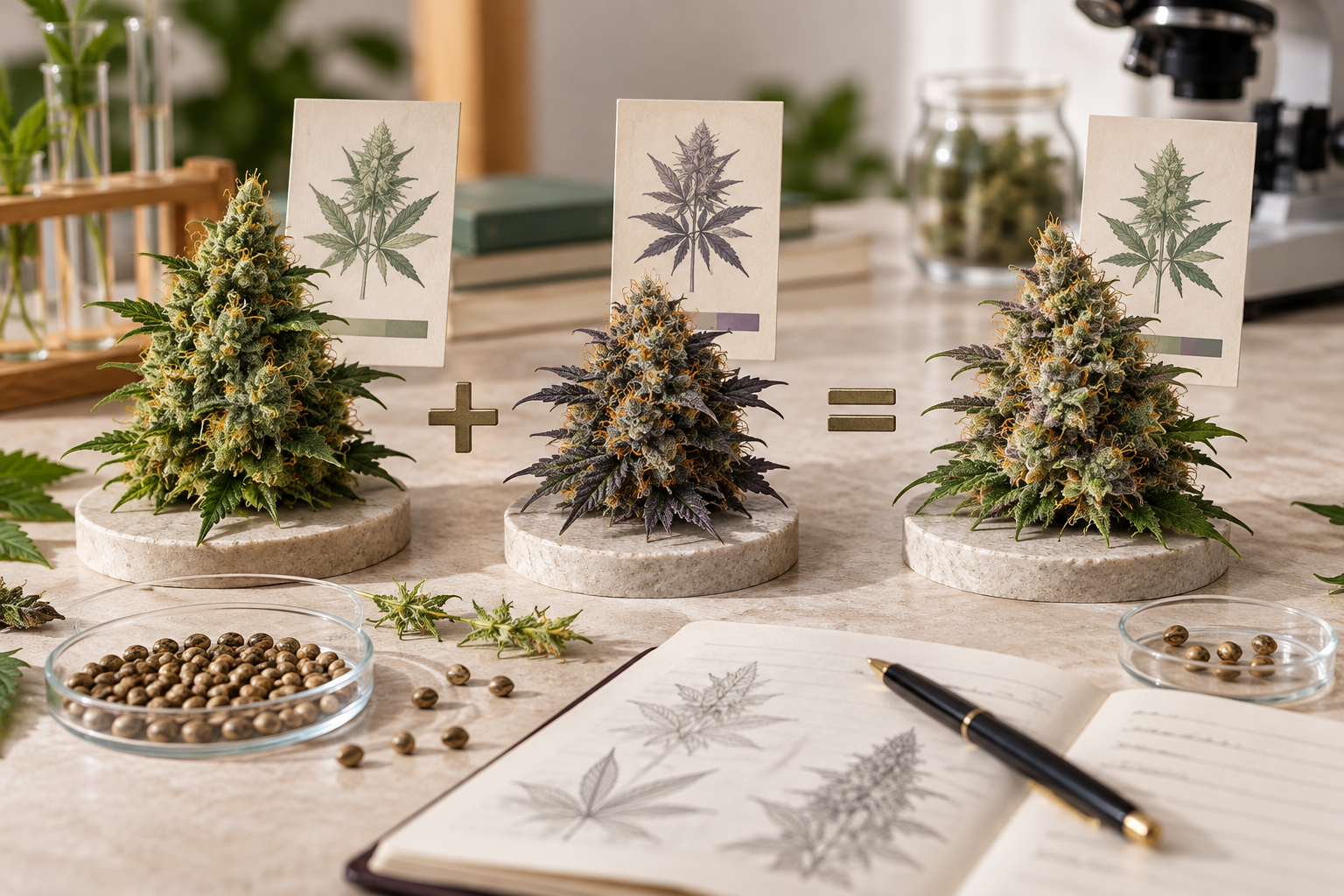
Cultivation practices explain part of the story, but cannabis breeding has also played an important role. For decades, growers and breeders have selected plants with desirable traits, including higher cannabinoid concentrations, and used those plants as parents for subsequent crosses. Repeating that process over many generations can gradually shift a crop toward higher THC levels.
Modern breeding techniques have added genetic tools to this process. Researchers can use genomic information and markers associated with cannabinoid-production pathways— including genes involved in THC and CBD synthesis—to study and select plants with desired chemical profiles. Newer techniques such as genome editing may eventually make it possible to alter specific traits more precisely. However, these methods remain technically challenging in cannabis and are not solely responsible for the historical rise in potency.
Alongside the spread of sinsemilla cultivation, selective breeding and improved growing methods are widely viewed as important contributors to the increase in cannabis potency. However, the relative contribution of each factor is difficult to measure, and potency trends vary by country, product type, sampling method, and time period.
How Indoor Growing Affects Cannabis Potency
Indoor cultivation gives growers greater control over light, temperature, humidity, irrigation, and nutrient delivery than most outdoor operations. Growers can adjust light intensity and duration, maintain more consistent environmental conditions, and reduce some of the weather-related variability associated with outdoor production.
That control can help producers achieve more consistent results, especially when they are working with stable genetics and standardized growing practices. Environmental conditions can affect cannabinoid and terpene production, but indoor cultivation does not automatically produce stronger cannabis.
Potency also depends on genetics, plant health, harvest timing, drying, storage, and laboratory testing. Research comparing indoor- and outdoor-grown cannabis has found differences in chemical profiles, but it does not establish that indoor flower is always more potent. Research comparing indoor- and outdoor-grown cannabis illustrates why cultivation environment is only one part of the equation.
The shift toward indoor and controlled-environment cultivation is still an important part of cannabis history. It allowed growers to produce cannabis in regions and seasons that were less suitable for outdoor cultivation while giving them greater control over flowering and harvest conditions. These developments occurred alongside changes in genetics, breeding, cloning, and cultivation knowledge.
Why Does Modern Cannabis Have Less CBD?
Some traditional and landrace cannabis populations contained more CBD, or more balanced THC-to-CBD ratios, than many modern commercial drug-type varieties. However, “older cannabis” was not chemically uniform. Historical cannabis varied according to its genetics, geographic origin, growing conditions, and whether it was cultivated primarily for fiber, seed, CBD, or intoxicating effects.
Modern breeding programs have often prioritized high THC and the traits associated with stronger psychoactive effects. Over time, that selection favored plants with genetic characteristics that promote THCA production and reduced the expression of CBD-producing pathways.
THCA and CBDA are produced from the same precursor, cannabigerolic acid, or CBGA. Genetic differences in the enzymes involved in those pathways help determine whether a plant produces predominantly THC, predominantly CBD, or a more balanced cannabinoid profile. Research on the genetic architecture of cannabinoid variation helps explain why modern commercial varieties can differ so sharply from older landrace populations.
So while THC and CBD production can compete at the biochemical pathway level, it’s more accurate to say this comes down to genetics and enzyme activity rather than the plant simply running low on resources.
This history is a big reason why most commercial cannabis strains today have very little CBD in them. Over time, CBD-focused breeding has carved out its own niche in cannabis farming, with breeders zeroing in on plants that produce more CBD and less THC.
The Rise of Concentrates
Flower is only part of today’s cannabis market. Concentrates such as hash oil, wax, shatter, rosin, and live resin remove much of the plant material and concentrate the resin that contains THC and other cannabinoids.
As a result, concentrates are usually far stronger than flower. One analysis of cannabis concentrates found that their average THC content rose from 46% in 2014 to 68% in 2020.
Extraction methods and testing have also improved, helping concentrates become more consistent and widely available in dispensaries. This does not mean ordinary flower became stronger because of concentrates; it means the market now includes a separate product category with much higher THC levels.
Consumer Demand and Market Forces
Cultivation and breeding explain how higher-potency cannabis became possible, but market forces helped determine why producers continued prioritizing it. In legal markets, THC percentage is one of the most visible and easily compared numbers on a product label. Consumers may treat it as a shorthand for strength, much as alcohol by volume provides a quick comparison between alcoholic beverages.
That emphasis can encourage cultivators and retailers to promote products with higher THC levels. However, potency is not the only factor shaping the market. Flavor, aroma, yield, appearance, consistency, brand reputation, price, and consumer preferences also influence which products are grown and sold.
The expansion of regulated medical and adult-use markets added another important development: potency information became more visible. Illicit-market cannabis was not consistently tested or labeled, so consumers often had little reliable information about its THC content. Legal-market testing provides more information, although testing methods, labeling rules, and laboratory accuracy can still vary by jurisdiction and product type.
Regulation and High-THC Cannabis
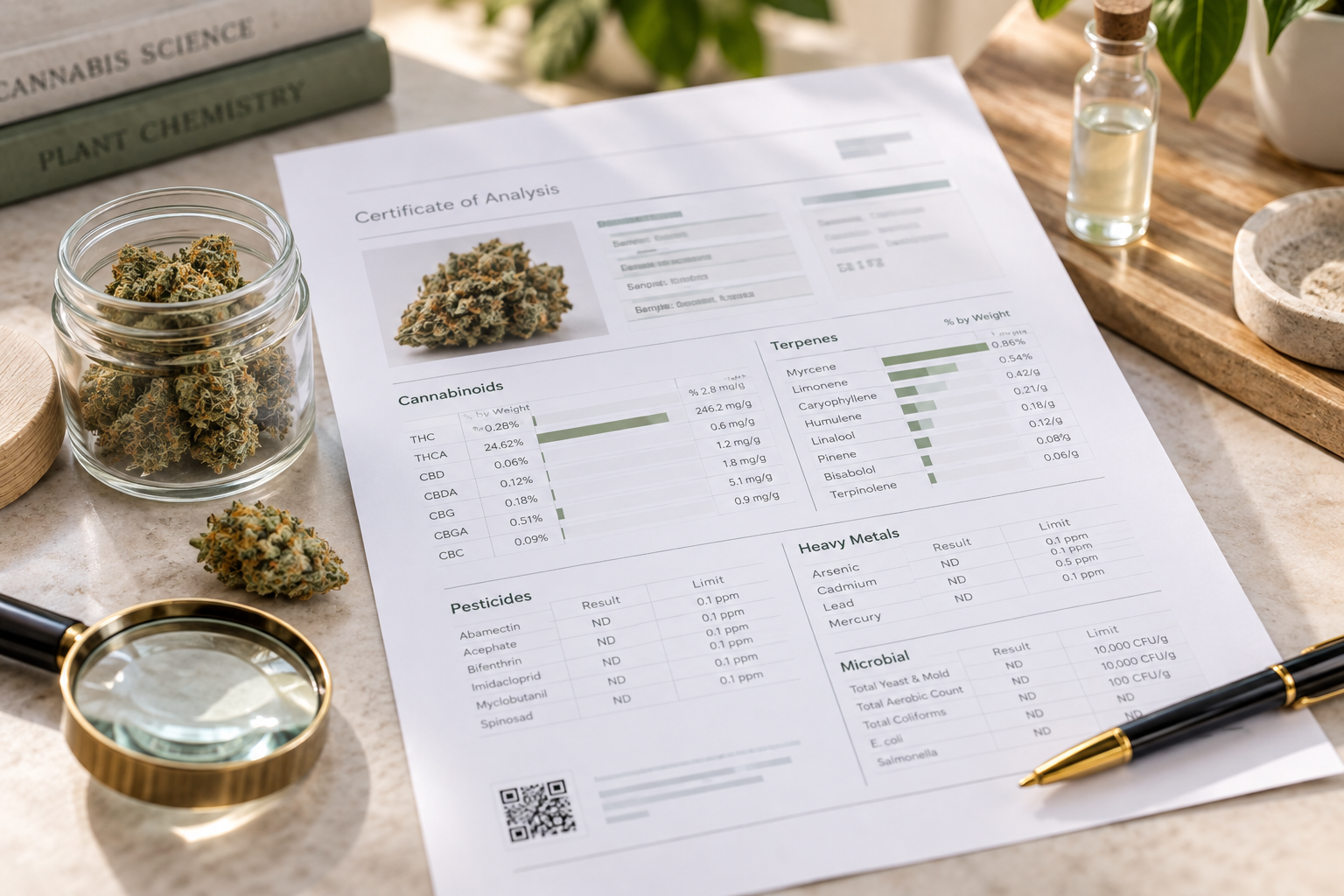
The rise in cannabis potency has attracted attention from public-health researchers and regulators. State cannabis programs commonly require products to display THC and CBD information, but the rules differ by jurisdiction. Requirements may address total THC, serving size, package limits, warning statements, testing procedures, and how potency is presented to consumers.
Some states and policymakers have also considered potency limits or additional restrictions for particular high-THC products. These policies vary widely, and a rule that applies to edibles or concentrates may not apply to flower.
The National Institute on Drug Abuse also tracks long-term changes in cannabis potency through its federal cannabis potency monitoring data. The dataset shows that average THC concentration in seized cannabis samples increased substantially over time, although the figures describe tested samples from the illegal market rather than every cannabis product sold or used in the United States.
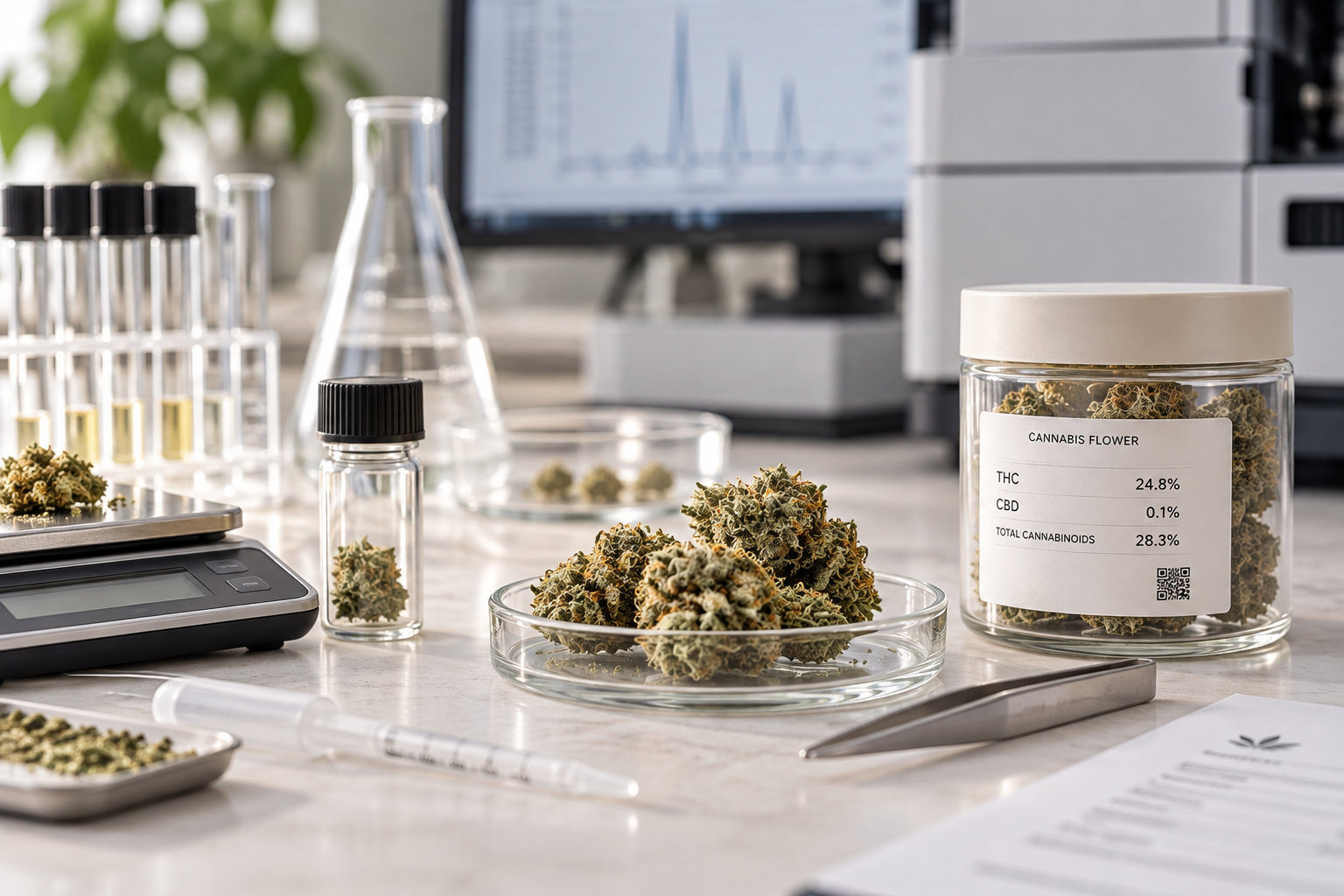
Clearer labeling is one practical result of the modern regulated market. Consumers today generally have more information about a product’s reported THC and CBD content than consumers did in earlier decades. At the same time, a label is only one piece of information. Actual effects can also depend on dose, consumption method, tolerance, individual biology, and the product’s broader cannabinoid and terpene profile.
Reading Potency With Context
Modern cannabis potency reflects decades of change, including sinsemilla cultivation, selective breeding, controlled growing environments, improved processing, concentrated products, and clearer labeling.
Still, a higher THC percentage does not automatically mean a better product or a stronger experience for everyone. Outdoor flower can be potent, indoor flower can vary, and concentrates should be compared separately because extraction removes much of the plant material and increases cannabinoid concentration.
Understanding this history can help you look beyond one number on a label.