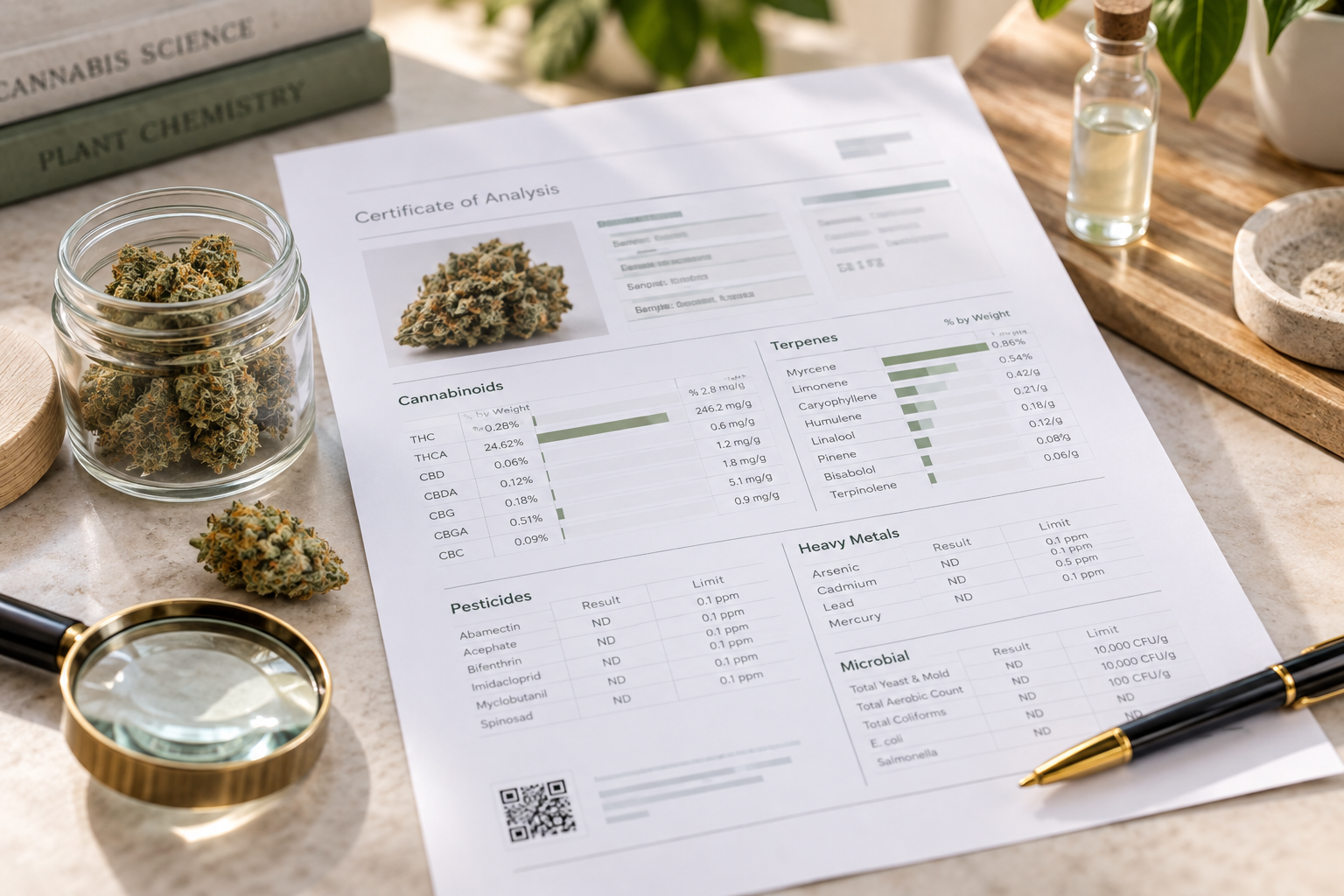
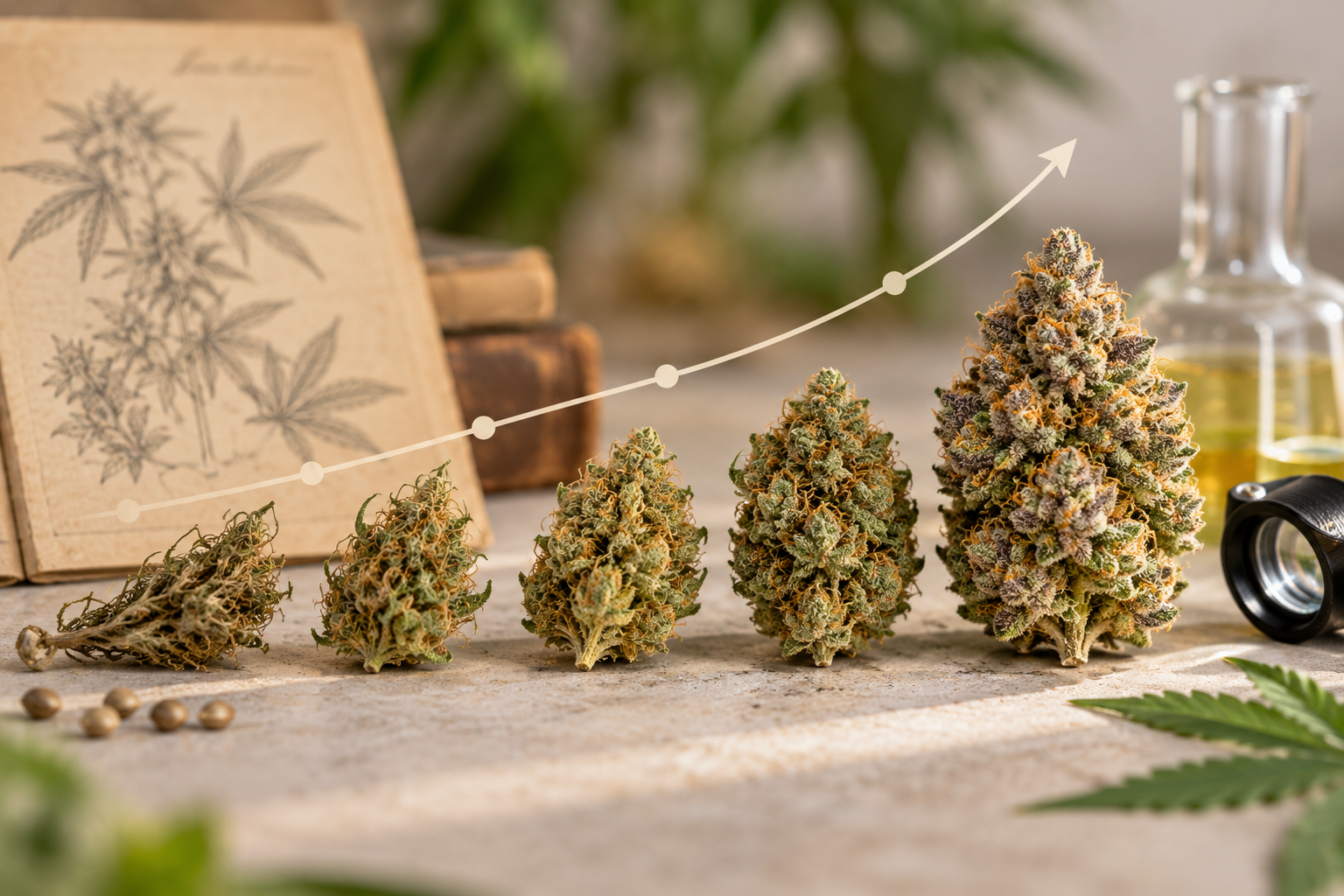
Cannabis stored at room temperature loses roughly 16 percent of its THC content in the first year alone, according to data compiled from decades of cannabinoid stability research. By year four, that loss climbs past 40 percent. Those numbers come from plant material that wasn’t stored particularly well, but they make a simple point clearly: how you store cannabis after you bring it home matters just as much as the quality of the product when you bought it.
Cannabis is a plant product, and like any plant product, it degrades over time through predictable chemical processes. The good news is that those processes respond directly to a handful of controllable factors. Once you understand what’s actually happening to cannabinoids and terpenes in storage, protecting a purchase becomes a matter of a few simple habits rather than guesswork.
The Four Enemies of Fresh Cannabis
Light, heat, air, and humidity each degrade cannabis through different mechanisms, and understanding how each works makes it clear why standard storage advice looks the way it does.
Light, especially ultraviolet light, is widely considered the single greatest factor in cannabinoid loss. One of the foundational studies on cannabis stability found that light exposure caused significantly more cannabinoid degradation than temperature did, particularly in cannabis extracts and solutions.
Heat accelerates the natural conversion of THC into CBN, a related cannabinoid that forms as THC oxidizes over time. Air exposure drives that same oxidation process, since oxygen is what THC molecules react with as they break down. Humidity that’s too low causes trichomes, the resin glands that hold most of a flower’s cannabinoids and terpenes, to become dry and brittle, while humidity that’s too high creates conditions where mold can develop.
How to Store Cannabis Flower for Maximum Freshness
Flower is the most sensitive product category, since it has the most surface area exposed to its environment and the least processing standing between it and outside air, light, and moisture. Getting flower storage right addresses all four of those degradation factors at once.
Choosing the Best Container for Storing Weed
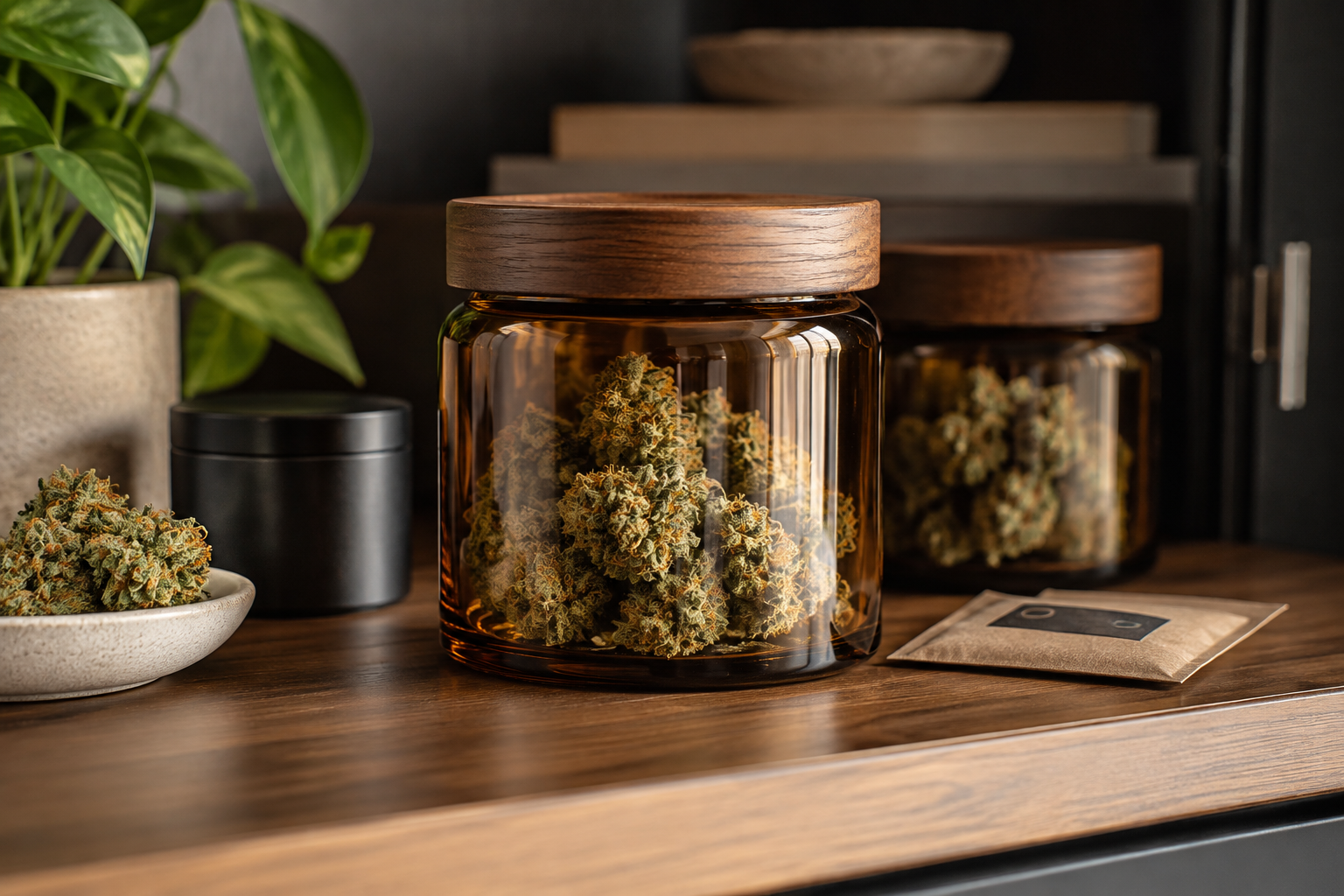
An airtight, opaque container is the foundation of good cannabis storage. Glass jars with rubber-sealed lids are a common choice because glass doesn’t interact chemically with the plant material the way plastic sometimes can, and an opaque or tinted jar blocks light without requiring a separate storage location. Clear glass jars work fine as long as you keep them somewhere dark, like a cabinet or drawer, rather than on an open shelf or windowsill.
Plastic bags are a common short-term solution, but they’re a poor choice for anything beyond a day or two. Static buildup in plastic bags can damage delicate trichomes, and most bags aren’t fully airtight, allowing slow oxidation to continue unchecked. A resealable glass or food-safe container with a real seal is a meaningfully better long-term option.
Getting Humidity Control Right
Cannabinoid-rich trichomes need a specific humidity range to stay intact without inviting mold, and most research and industry guidance points to roughly 55 to 62 percent relative humidity as the target range.
Two-way humidity control packets, which absorb or release moisture depending on conditions inside a sealed container, are widely used specifically because they maintain that range automatically rather than requiring constant manual adjustment.
Without any humidity control, flower stored in a very dry climate can become harsh and brittle within weeks, while flower stored in a humid environment without airflow control risks mold growth.
Does Cannabis Go Bad? What Actually Happens Over Time
Cannabis doesn’t spoil the way fresh produce does, but it absolutely changes chemically over time, and in that sense, yes, cannabis does go bad if it isn’t stored properly.
The primary change is the gradual conversion of THC into CBN through oxidation, a process that speeds up significantly with heat, light, and air exposure. A related but separate process affects terpenes, the aromatic compounds responsible for a strain’s characteristic smell; because terpenes are volatile and evaporate more readily than cannabinoids, aroma is often the first thing a poorly stored batch loses.
Mold is the other real risk, and it’s the one storage failure that actually makes cannabis unsafe rather than just less potent or less fragrant. Mold generally requires excess moisture to take hold, which is why humidity control matters as much for safety as it does for preserving potency.
How Long Does Cannabis Stay Fresh?
Under good storage conditions, meaning an airtight, opaque container kept in a cool, dark place with controlled humidity, cannabis flower typically holds most of its cannabinoid and terpene profile for somewhere between six months and a year.
Can You Freeze Cannabis Flower to Keep It Fresh?
This is one of the more debated questions in cannabis storage, and the research is genuinely mixed rather than pointing to one clear answer.
A controlled postharvest study stored dried and cured cannabis flower and extracts in the dark at room temperature, refrigerator temperature, and two freezer temperatures for up to one year. The researchers found that storage at about 4°C (39°F) generally caused fewer changes in the measured phytocannabinoid profile than room-temperature storage. Terpene levels declined under all tested conditions, with the greatest losses at the lowest temperature, particularly −80°C.
These results do not mean that refrigerator storage is always better than freezing for every cannabis product. The study examined two cannabis chemovars and specific storage conditions so that the results may vary with the cultivar, product type, packaging, moisture level, and starting chemical profile.
Cold storage also creates practical challenges. A container moved from a cold environment into warm, humid air can develop condensation, and repeated temperature changes may introduce moisture or make cold trichomes more brittle. If you refrigerate or freeze cannabis, use an airtight, moisture-resistant container, minimize temperature cycling, and allow the sealed container to return to room temperature before opening it.
How to Store Cannabis Concentrates and Vapes
Concentrates like rosin, wax, and shatter are more concentrated than flower by definition, which means they’re also more sensitive to heat, since many concentrate textures will soften or melt at temperatures that wouldn’t affect flower at all.
Parchment paper or silicone containers kept in a cool, dark place work well for most concentrate textures, and refrigeration is a reasonable option for concentrates specifically, since most are already fully sealed in a way that limits the condensation problem flower can run into.
Vape cartridges hold up somewhat better than flower or concentrates because the oil inside is typically already sealed away from air. Even so, storing cartridges upright in a cool, dark place helps prevent the oil from degrading or leaking through the cartridge’s seal over time, and extreme heat, like a hot car in summer, can affect both the oil’s consistency and the cartridge’s hardware.
How to Store Cannabis Edibles
Edibles behave more like the food products they are than like flower or concentrates, so storage guidance depends heavily on the specific product. Gummies and baked goods generally follow standard food safety practices, meaning airtight storage at room temperature for short-term freshness, or refrigeration for products with a shorter shelf life due to ingredients like dairy or fresh fruit. Hard candies and lozenges tend to store well at room temperature in a sealed container for extended periods, similar to how any non-perishable candy would be stored.
The cannabinoid content in edibles is generally more stable over time than in flower, since the extraction and often the encapsulation process already protects the cannabinoids from direct light and air exposure. That said, an edible past its stated shelf life should be evaluated the same way any other food product would be, based on ingredient freshness rather than cannabinoid content alone.
How to Store Cannabis Tinctures
Tinctures are typically the most stable cannabis product category, since they’re usually packaged in tinted glass bottles that already block light, and the alcohol or oil base helps protect cannabinoids from oxidation.
Keeping a tincture bottle tightly capped and away from direct heat sources like a stovetop or sunny windowsill is usually enough to maintain potency over the product’s intended shelf life.
If you’re comparing storage stability across product categories before deciding what to try next, a good next step is to ask staff at The Botanist which formats in a given product line tend to hold up longest, since shelf stability can vary by brand and formulation even within the same category.
Building a Storage Routine That Actually Works
The core principles behind how to store cannabis stay consistent across every product type, even though the specifics shift from flower to concentrates to edibles. Keep products away from light, especially direct sunlight and prolonged artificial light. Keep them sealed against air whenever possible, since oxidation is a slow but constant process once a container is opened repeatedly.
Keep temperatures moderate and stable rather than swinging between hot and cold, and pay attention to humidity, especially for flower, where the trichomes that hold most of a product’s chemical profile are most exposed to environmental conditions.
None of this requires an elaborate setup. A cabinet drawer away from a window, a few airtight glass jars, and a couple of humidity control packets cover most of what flower needs, and the other product categories mostly just need a cool, dark, stable spot.