A peer-reviewed study that tested 84 hemp-derived CBD products sold online found that nearly 70 percent were mislabeled for CBD content, and 18 of those products contained THC that wasn’t disclosed on the label at all. That study is years old now, and testing standards have tightened considerably since, but it captures exactly why the certificate of analysis matters: it’s the one document standing between a product’s marketing and its actual, lab-verified contents.
Most people have seen a QR code on a cannabis product’s packaging and never scanned it. Knowing how to read a cannabis COA turns that overlooked code into one of the most useful tools available to a consumer, whether you’re comparing two similar products, checking a specific cannabinoid percentage, or just confirming that something passed every safety test before it reached the shelf.
What Is a Cannabis COA?
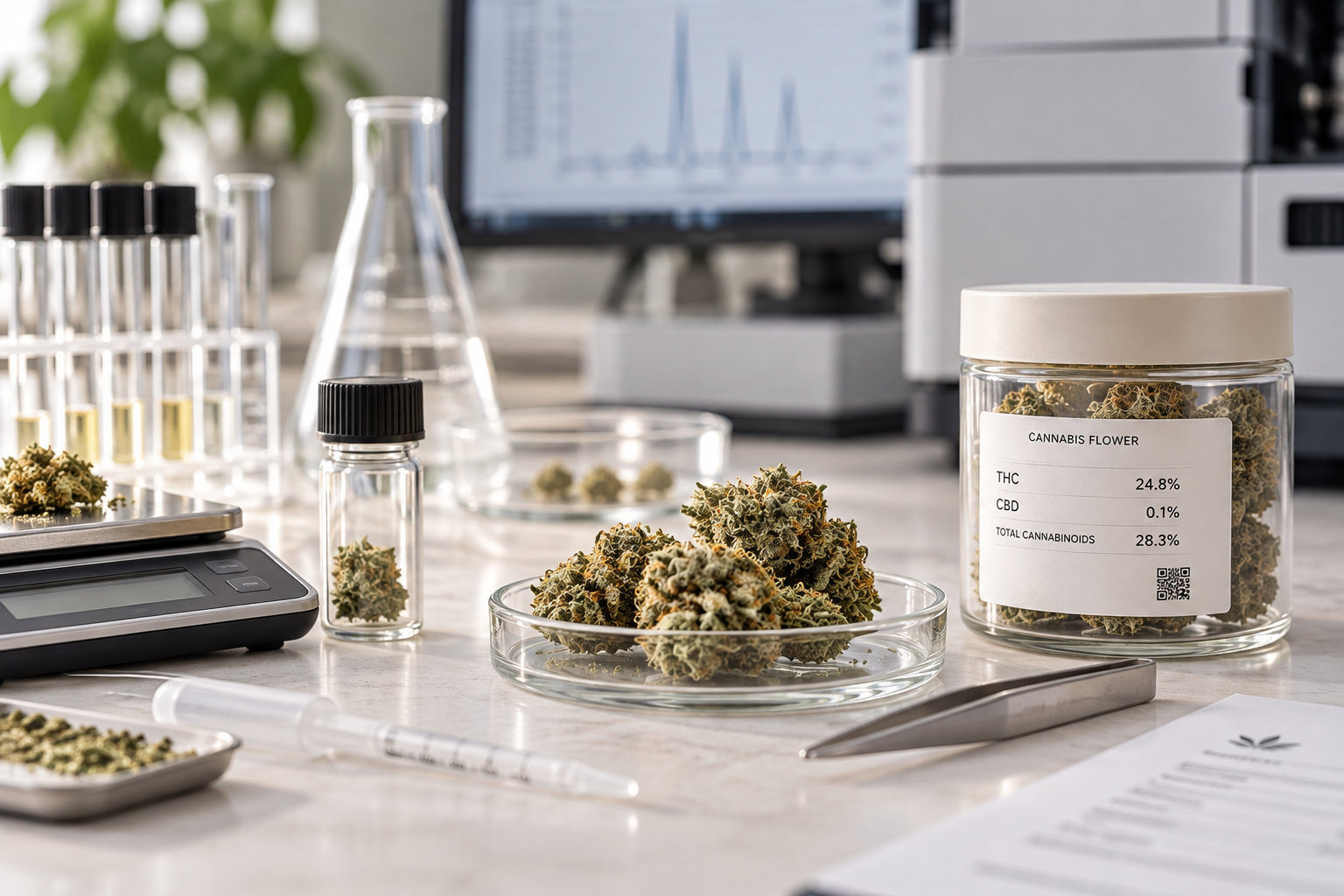
A certificate of analysis, or COA, is the official document a licensed testing laboratory issues after analyzing a cannabis product for potency and safety. Every legal cannabis market requires this testing before a product can be sold, covering everything from cannabinoid and terpene content to screening for pesticides, heavy metals, mold, and residual solvents left over from extraction.
The COA is tied to a specific batch, not a product line in general, since potency and contaminant levels can vary somewhat from one harvest or production run to the next.
That’s an important distinction: a COA you find printed on a company’s website might represent an older batch than what’s actually on the shelf, which is one reason batch-specific QR codes have become the standard way to connect a physical product to its actual lab results.
How to Read a Cannabis COA: Starting With the Header
The header of a COA establishes whether the document is even trustworthy before you get to a single result. This is where knowing how to read a cannabis COA starts paying off immediately, since a legitimate report should always include a report date, the name of the testing laboratory, the product’s brand, and a batch or lot number.
Check that the report date is reasonably recent relative to the product’s stated shelf life, and confirm that the batch number listed on the COA matches the batch number printed on the product packaging. If those numbers don’t match, the COA you’re looking at may belong to a different production run entirely, which makes its results essentially meaningless for the specific product in your hand.
The Results Summary: Your Fastest Read
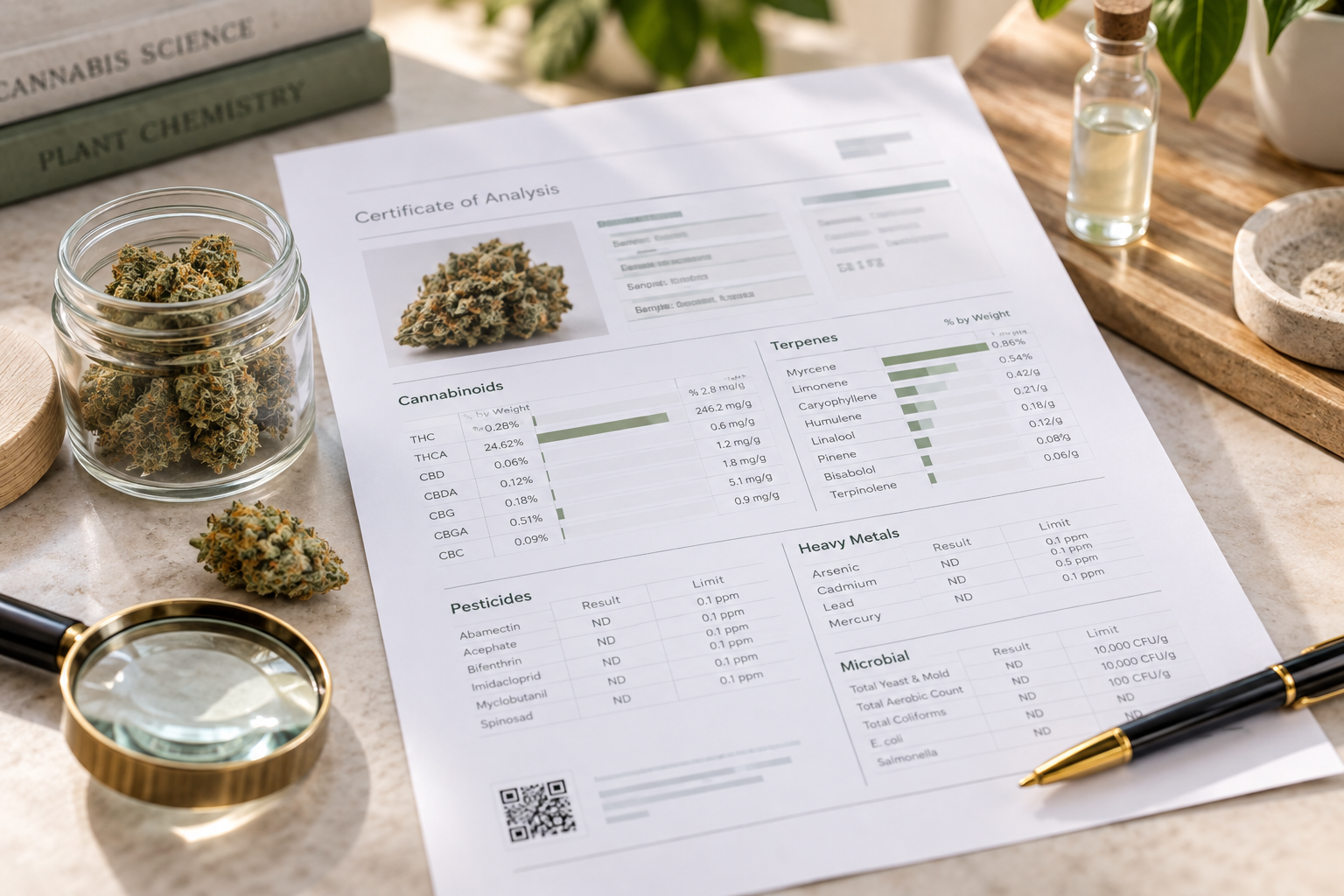
Most COAs open with a summary section that condenses the full report into a quick pass or fail overview. This section typically lists total cannabinoid potency alongside a simple indicator for every safety category tested, residual solvents, heavy metals, pesticides, and microbial contaminants, showing whether each one passed.
For a quick check, the summary section alone often answers the most common question: did this product pass everything it needed to?
A full pass across every safety category, combined with cannabinoid numbers reasonably close to what’s advertised on the label, strongly suggests a well-tested, accurately labeled product.
Cannabis Lab Report THC and CBD Percentages: Understanding Potency
The potency section is usually what people look for first, and it’s worth understanding exactly what the numbers represent. A cannabis lab report typically lists each cannabinoid, THC, THCA, CBD, CBDA, and often minor cannabinoids like CBG or CBN, along with two figures: a concentration measured in milligrams per gram, and that same figure converted to a percentage of overall weight.
Total THC vs Raw Numbers
Raw flower usually shows most of its THC content in the acidic THCA form rather than as active THC, since that conversion only happens once heat is applied. Total THC accounts for this by combining the measured THC with a portion of the THCA, calculated using a standard conversion factor that reflects how much mass is lost during that chemical conversion. This is why a flower COA might show very little raw THC alongside a much higher THCA number, with the total THC figure representing what the product could deliver once fully heated.
Reading a cannabis lab report’s THC and CBD percentages side by side also tells you the overall cannabinoid ratio of a product, which is useful information beyond just the headline potency number, especially for anyone comparing products across a broader cannabinoid profile rather than THC alone.
Cannabis Terpene Lab Results: What They Tell You
Terpene testing is a section worth paying attention to, even though it doesn’t get the same spotlight as THC percentage. Cannabis terpene lab results list each detected terpene by name, myrcene, limonene, caryophyllene, and dozens of others along with its individual concentration. Together, this profile is what actually produces a product’s distinct aroma and flavor.
A product with a full, well-documented terpene panel generally reflects more careful cultivation, harvesting, and storage practices, since terpenes are volatile compounds that degrade relatively easily with heat, light, and time. A COA showing minimal or no terpene content on a product marketed around a specific aroma profile is worth a second look, since it suggests the tested batch may not match what’s being advertised.
Cannabis Pesticide Test Results Explained
Safety testing is where a COA does its most important work, and cannabis pesticide test results are one of the more heavily regulated sections. Labs screen for a defined panel of pesticide compounds, often dozens of them, since pesticide residue can end up concentrated in a way that’s particularly relevant for a product that’s typically smoked or vaporized rather than washed first like produce.
Reading Action Levels and LOQ
Each pesticide analyte on a COA is compared against an action level, the maximum concentration regulators consider acceptable for that specific compound. You’ll often see results listed as “<LOQ,” meaning below the limit of quantification, which indicates the lab either didn’t detect the compound or found it in an amount too small to measure reliably.
That’s the result you want to see across the board.
Any result reported above the action level should have already caused that batch to fail testing and be pulled from sale, so seeing pesticide results on a product you’re holding generally means that batch already cleared this bar.
Other Safety Panels: Solvents, Metals, and Microbials
Beyond pesticides, a full-panel COA typically covers residual solvents, heavy metals, mycotoxins, and microbial contaminants. Residual solvent testing matters specifically for extracted products like vapes and concentrates, checking for leftover traces of whatever solvent was used during extraction.
Heavy metal testing screens for contaminants like lead, arsenic, cadmium, and mercury, which cannabis plants can absorb from contaminated soil or water during cultivation.
Mycotoxin testing checks for toxic byproducts of mold growth, and microbial testing screens for pathogens like E. coli and Salmonella, which should show up as simply “absent” on a passing result.
State regulatory frameworks differ somewhat in which compounds get tested and at what thresholds, but the underlying categories stay consistent across nearly every legal market, and state cannabis regulators have cited concerns about testing consistency and inflated results as reasons for tightening lab oversight and standardizing testing protocols in recent years.
How Do I Know If a Cannabis COA Is Legitimate?
A legitimate COA includes a few specific markers worth checking. Look for the testing laboratory’s license number, which confirms it’s an accredited facility operating under state oversight rather than an unverified or informal source.
A signature or sign-off from a lab scientist or director adds another layer of accountability, since it means a real person is standing behind the reported results.
Cross-referencing the lab’s name independently is also worth doing occasionally, particularly for products from brands you’re less familiar with. A quick search confirms whether the laboratory listed on a COA is a real, licensed facility rather than a name invented to make an unverified document look official.
Consistency between the COA’s batch number, product name, and what’s printed on the physical packaging rounds out the basic legitimacy check.
Where to Find a Product’s COA
Most legal dispensary products include a QR code directly on the packaging that links to the batch-specific COA, and many brands also publish COAs in the product listings on their own websites.
If neither is available for a product you’re considering, treat that as a flag rather than an oversight, since transparent lab testing is both a regulatory requirement and a basic trust signal in a legal market.
Reading Your Next Lab Report With Confidence
A cannabis COA isn’t a document meant only for regulators and lab technicians. Once you know how to read a cannabis COA, from checking the header for batch consistency to understanding what a passing pesticide result actually means, that QR code on a product’s packaging turns into genuinely useful information rather than something to scroll past.
The numbers on that report reflect real testing under regulatory oversight, and reading them is one of the most direct ways to know exactly what you’re getting before it ever leaves the store.