A Colorado study that quietly purchased 277 flower and concentrate products from 52 dispensaries found that 44 percent of the flower samples were labeled outside an acceptable accuracy range, and most of those mislabeled products overstated their THC content rather than understating it.
That’s not a fringe result from one bad batch. It’s a data point that says something important about the number most consumers use to decide what to put in their cart: cannabis THC testing and labeling is a real scientific process, but it’s one with more moving parts, and more room for variation, than a single percentage on a jar suggests.
Understanding how that percentage actually gets calculated changes how you read a label. It’s not a subjective quality score or a marketing claim dreamed up by a brand. It’s the output of a specific chemical analysis, run through a specific formula by a lab using specific equipment, and each step introduces variables worth knowing about.
The Number on the Label Is a Lab Result, Not a Guarantee
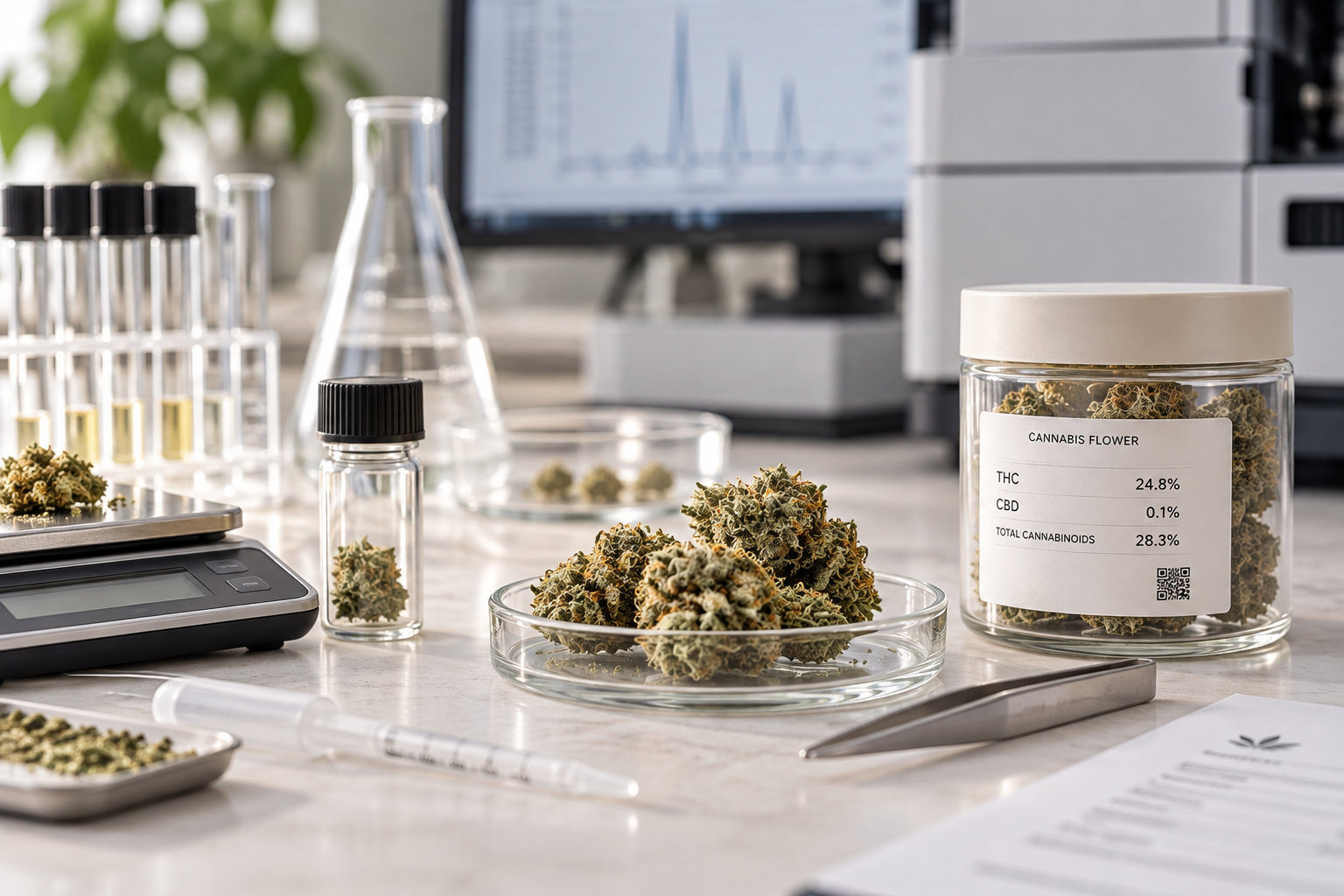
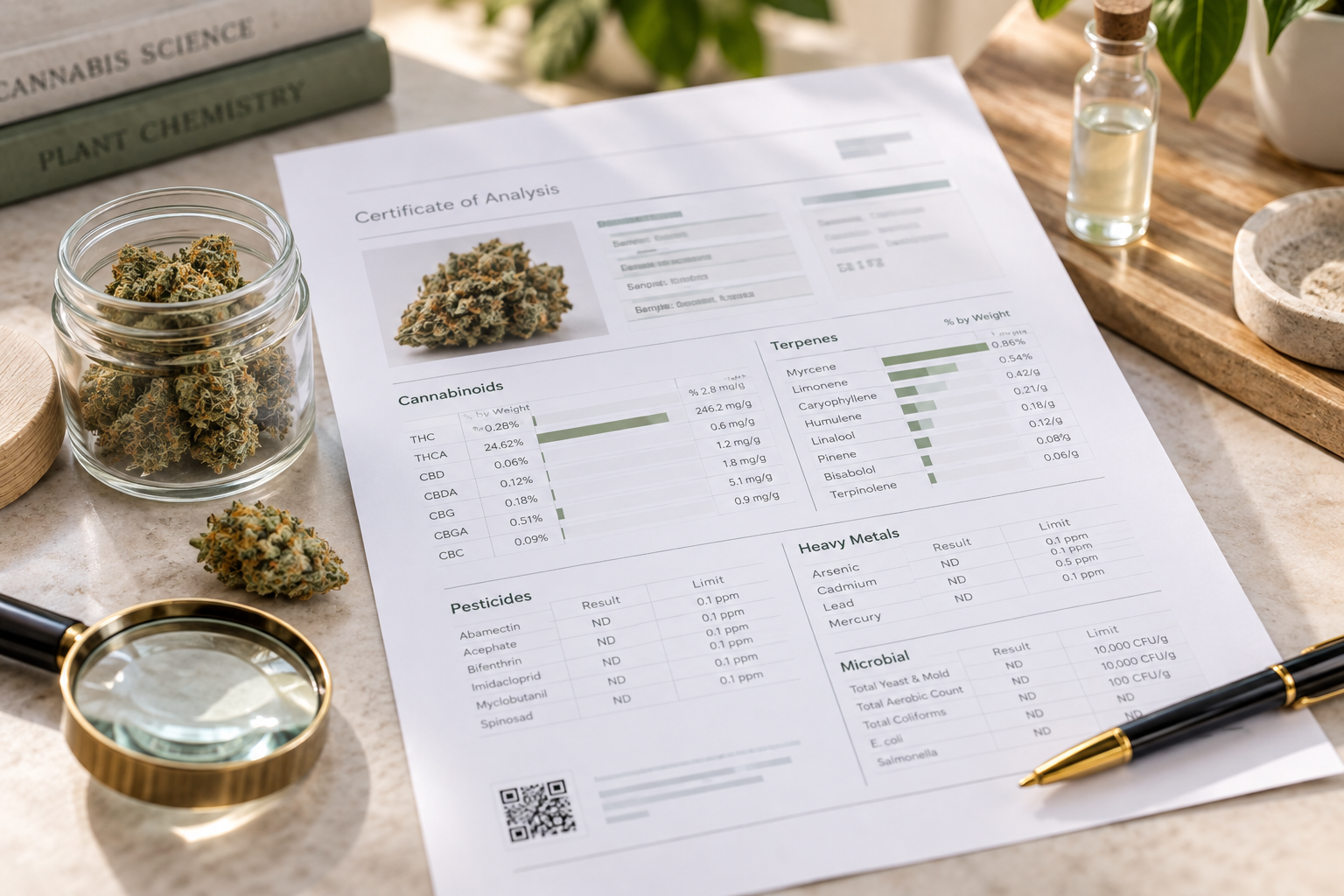
Every legal cannabis market requires potency testing before a product can be sold. That testing happens at licensed, third-party laboratories rather than in-house at the farm or processor. A sample from a batch is sent out, analyzed using specialized chemical instruments, and the lab returns a certificate of analysis listing the concentration of THC, CBD, and often a range of other cannabinoids present in that sample.
Cannabis THC testing and labeling exist specifically so that consumers have a consistent, regulated way to compare products, similar to how nutrition labels standardize how food products report calories or sugar content. The system works well in principle. In practice, the accuracy of any individual label depends on several factors that aren’t always visible from the shelf.
How Is THC Percentage Measured in Cannabis?
At its core, measuring THC percentage means quantifying how much of a given cannabinoid is present in a known weight of plant material or extract. Labs do this using chromatography, a category of chemical analysis techniques that separate the individual compounds in a mixture so they can be identified and measured one at a time.
Sample Preparation and Representative Sampling
Before any instrument gets involved, a lab must collect a sample that reflects the batch it’s supposed to represent. Regulations typically require pulling a minimum percentage of a batch’s total weight from multiple points throughout the batch, since cannabinoid concentration can vary even within a single plant or harvest. A sample pulled entirely from one corner of a batch might not reflect the average potency of the whole thing, which is why sampling protocols exist and why deviating from them is one of the quieter sources of label inaccuracy.
Cannabis Testing HPLC and Gas Chromatography: Two Different Approaches
Two analytical methods dominate cannabis potency testing, and the difference between them matters more than most consumers realize. High-performance liquid chromatography, or HPLC, separates and measures cannabinoids without heating the sample. Gas chromatography, or GC, vaporizes the sample using heat as part of the separation process.
That heat difference has a direct chemical consequence. Cannabis plants produce cannabinoids primarily in an acidic form, THCA rather than THC, and heat converts THCA into THC through a chemical reaction called decarboxylation.
Because GC testing applies heat during analysis, it tends to decarboxylate the sample, meaning a GC result may report a different THCA-to-THC balance than an HPLC result from the same material.
Peer-reviewed comparisons of these methods have noted this distinction, since HPLC allows separate quantification of a cannabinoid’s acidic and neutral forms, while GC’s heat exposure complicates measuring them independently. Most modern licensed labs rely on HPLC because it preserves that distinction, giving a clearer picture of what a sample contains before the end user applies heat.
THCA vs THC on a Cannabis Label: Why the Math Matters
This is where a lot of confusion happens on a dispensary label. Raw cannabis flower typically contains very little actual THC. Instead, it contains THCA, the non-intoxicating acidic precursor that only converts to THC once heat is applied, whether that’s from smoking, vaporizing, or cooking.
A flower sample might show 22 percent THCA and close to 0 percent THC on its raw lab result, which would be misleading to display on a label without further context, since almost none of that THCA has converted yet.
To account for this, labs use a standard conversion formula:
Total THC equals the THC percentage plus the THCA percentage multiplied by 0.877.
That 0.877 figure represents the proportion of THCA’s molecular weight that carries over to THC after decarboxylation, since the conversion process releases a small amount of mass as carbon dioxide and water vapor.
A sample testing at 22 percent THCA and 0 percent THC would show a total THC figure of about 19.3 percent once that math is applied, which is the number that typically ends up on the label.
Total THC vs Active THC on a Label
The distinction between total THC and what’s sometimes loosely called “active” THC comes down to timing.
Total THC represents the maximum potential THC content a product could deliver once fully decarboxylated, calculated using the formula above. It’s a projection based on chemistry, not a measurement of what’s already active in an unheated product. A pre-heated product like most vape cartridges, distillate, and many edibles already contains primarily activated THC rather than THCA, so the total THC figure on those labels reflects compounds that are already in their converted form rather than a projected outcome.
Flower and other raw or minimally processed products work differently, since most of their cannabinoid content typically remains in acidic form until a consumer applies heat themselves. This is a big part of why cannabis lab testing THC percentage figures on flower labels represent a calculated potential rather than a direct measurement of the compound in its converted state at the time of sale.
Why Cannabis Labels May Be Inaccurate
Several distinct factors can cause a label to diverge from what an independent retest would find, and they don’t all point to the same cause.
Natural variation within a batch is one factor, since cannabinoid concentration isn’t perfectly uniform across every bud on a plant, let alone across an entire harvest. Sampling methodology is another factor, since a sample not collected under proper representative sampling protocols may not reflect the batch’s true average.
Instrumentation and calibration differences between labs also contribute. A 2019 inter-laboratory comparison that sent identical cannabis distillate samples to five separate testing facilities found THC results ranging from 77 percent to 94 percent on the same material, a spread far larger than instrument precision alone would predict.
That kind of variability points to differences in calibration, method validation, and equipment maintenance across facilities, all of which are difficult for a consumer to see from a finished product label.
Why Do Different Labs Get Different THC Results?
Beyond instrumentation, labs can differ in the extraction solvents they use to pull cannabinoids from plant material before analysis, the reference standards they calibrate against, and how strictly they follow standardized testing protocols. Because state regulatory frameworks don’t always mandate a single testing method or a single set of calibration standards, some amount of lab-to-lab variation is built into the current system rather than being purely a matter of error.
This variability has drawn enough attention that some manufacturers have begun independently reviewing multiple labs’ results side by side to identify inconsistencies before products reach shelves.
Can Dispensaries Inflate THC Percentages?
The pressure to report a higher number is a documented part of the broader conversation around cannabis THC testing and labeling. Because THC percentage functions as a prominent shorthand for perceived value on a shelf, producers have a financial incentive to seek out labs that report higher numbers, a practice sometimes referred to informally as lab shopping.
Regulatory agencies in several states have issued formal warnings to testing labs over inconsistent or inflated reporting, and independent studies analyzing testing data across multiple legal markets have identified patterns consistent with systematic overstatement in certain samples.
Inflation isn’t universal, and many labs and producers maintain rigorous, consistent testing practices. But the incentive structure is real enough that regulators in multiple states have begun tightening oversight of testing labs specifically to address it, which is a meaningful part of why label accuracy has become an active policy conversation rather than a settled issue.
How Should You Use THC Percentage When Shopping?
Treat the number on a label as one data point describing a product’s chemical composition, not as the single measure of a product’s overall quality or value.
Comparing total THC alongside other lab-reported figures, like the full cannabinoid panel and terpene percentages, gives a more complete picture of what a product actually contains than THC percentage alone.
A product’s testing lab, batch date, and whether the certificate of analysis is available for review are all practical details worth checking, since transparency about testing tends to correlate with a producer’s overall attention to quality control.
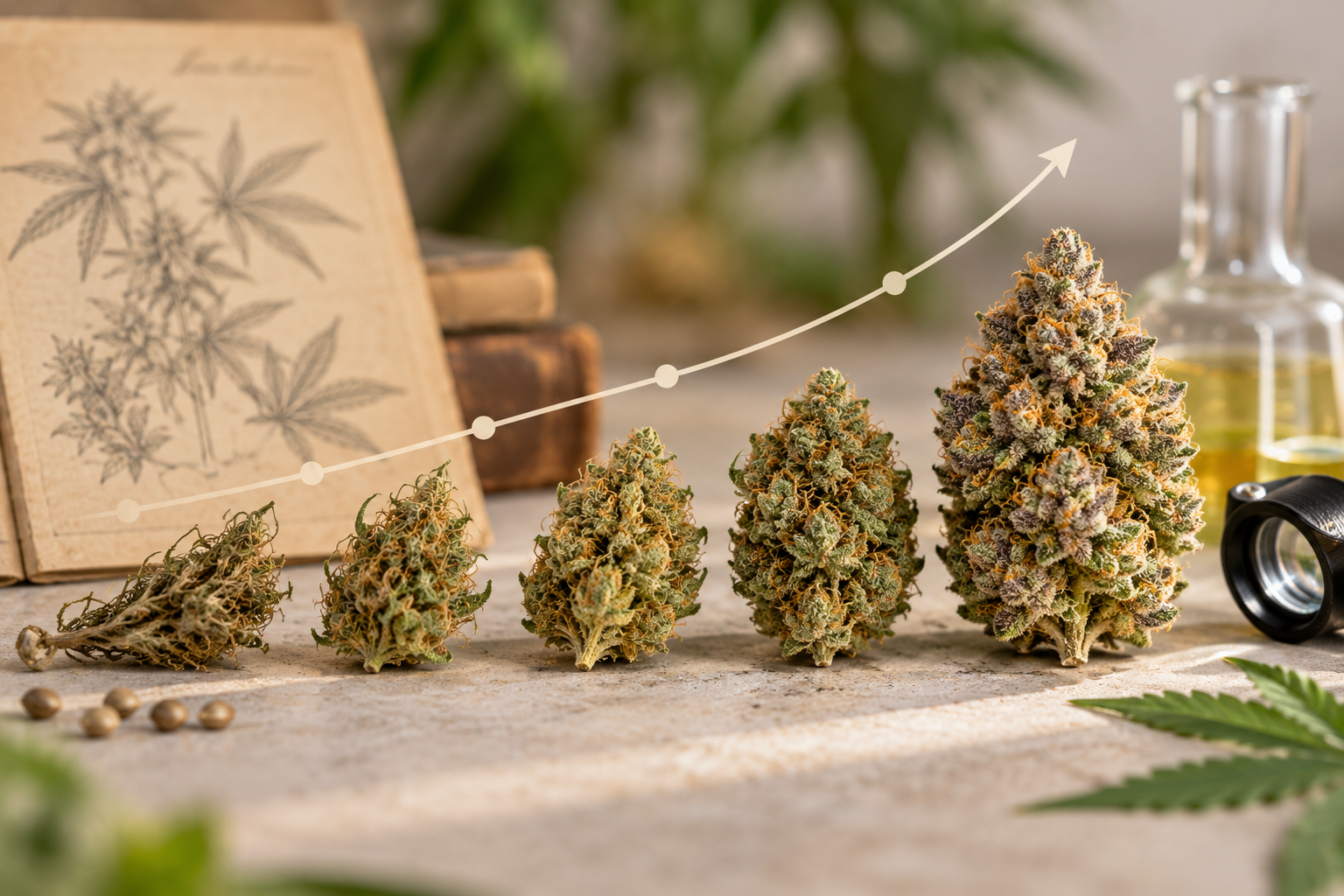
Our earlier look at why cannabis potency has increased over time covers how average THC figures across the market climbed over the decades, which is useful context for understanding why potency numbers carry so much weight in how products get marketed and compared today.
Reading a Label Like Someone Who Understands the System
A THC percentage on a dispensary label represents real laboratory work, a specific chemical formula, and a regulatory framework built to standardize how potency gets communicated to consumers.
It also reflects a system still working through inconsistencies in sampling, instrumentation, and lab-to-lab accuracy, which is worth keeping in mind whenever a number looks unusually high or unusually precise. Knowing the difference between THCA and THC, understanding how the 0.877 conversion works, and recognizing that lab variation is a documented, ongoing issue turns a single number on a label into something you can actually evaluate, rather than something you simply have to trust.