A batch of homemade edibles that turns out weaker than expected almost always traces back to one skipped or rushed step, not a bad recipe. That step is decarboxylation, and it’s the difference between infusing butter with raw cannabis and infusing it with cannabis that’s actually been converted into an active form first.
Raw cannabis, straight off the plant, contains very little THC. What it contains instead is THCA, a related but chemically distinct compound that only becomes THC once heat drives a specific chemical reaction. Understanding what decarboxylation actually does, and how to control it at home, is the single most useful piece of chemistry for anyone making their own infusions.
What Is Decarboxylation, Chemically?
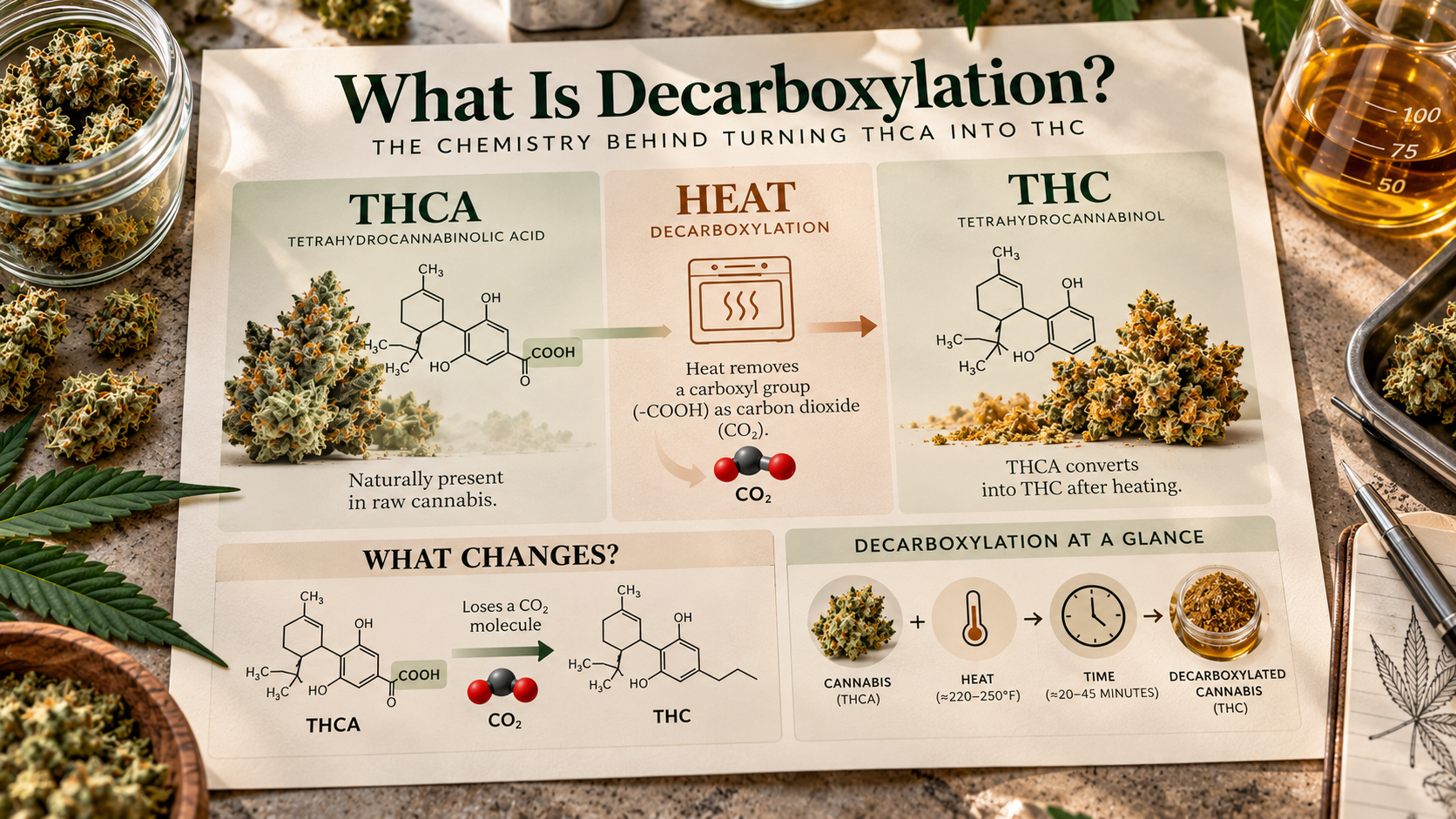
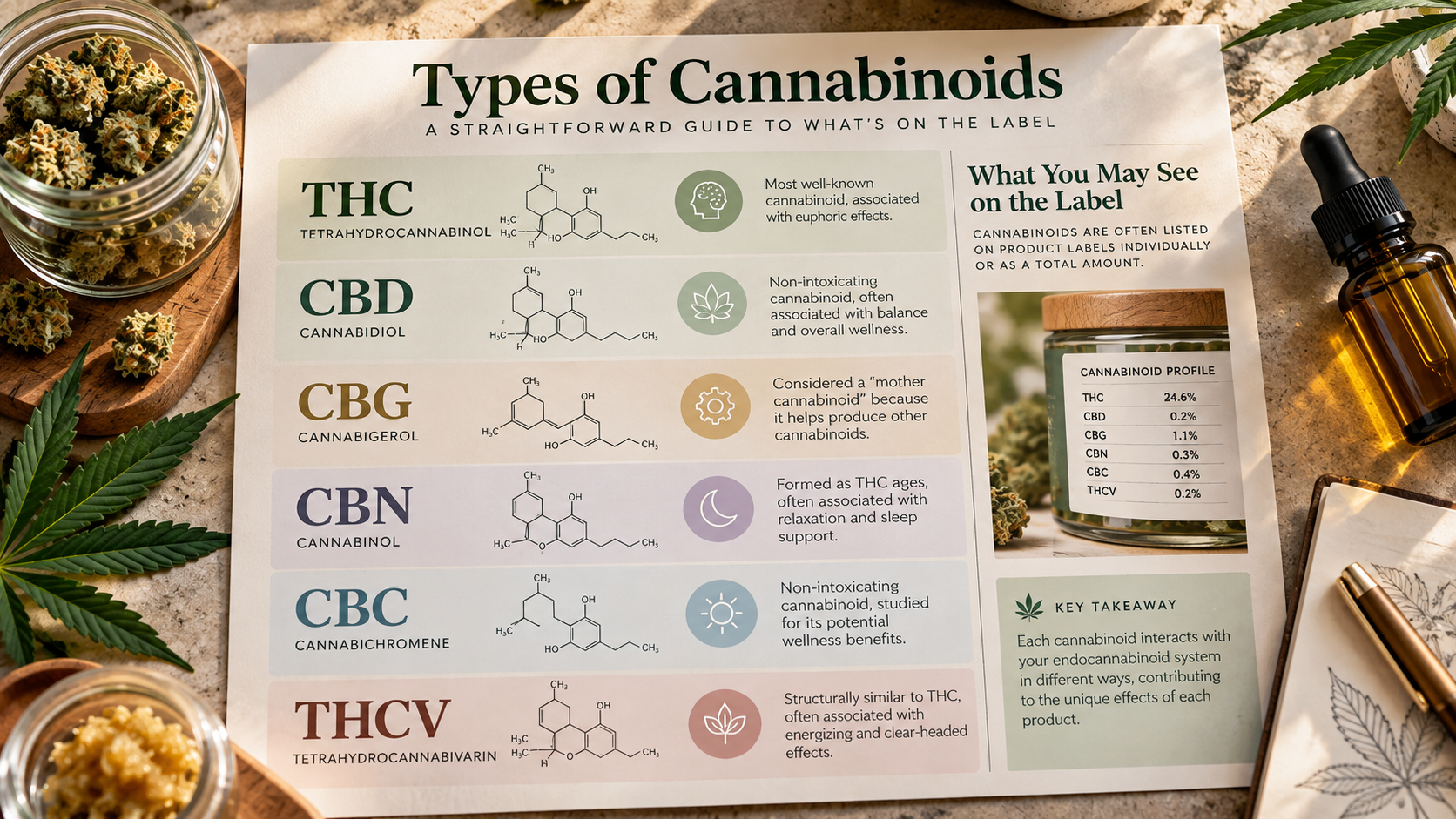
Decarboxylation is the chemical reaction that removes a carboxyl group, a specific cluster of carbon, oxygen, and hydrogen atoms, from a cannabinoid molecule. When that carboxyl group breaks off, it releases carbon dioxide gas, and the remaining molecule has a different structure and different properties than the one you started with. This same reaction happens to THCA, CBDA, and CBGA, converting them into THC, CBD, and CBG respectively.
Cannabis produces its cannabinoids almost entirely in acidic form as it grows. THCA is the acidic precursor to THC, and the plant has no practical way to skip that intermediate step during its own growth cycle. Heat triggers the conversion, whether it comes from a lighter, a vaporizer, or a controlled oven session at home.
THCA to THC Conversion: What’s Actually Happening
The THCA-to-THC conversion follows first-order reaction kinetics, meaning the conversion rate depends directly on how much THCA is still present at any given moment. A 2016 kinetics study published in Cannabis and Cannabinoid Research tracked this conversion across a range of temperatures and found that THCA decarboxylates roughly twice as fast as CBDA or CBGA under the same conditions, and that the reaction proceeds cleanly with minimal side reactions when temperature is properly controlled.
The same research also found that a small amount of mass is lost during conversion — and that’s completely normal. When THCA converts to THC, it releases carbon dioxide gas as a byproduct, which causes a drop of around 8 percent in total molar concentration at 110°C. This happens because the carboxyl group breaks off from the molecule — it’s just basic chemistry at work. So if you notice a little mass loss, don’t panic. It doesn’t mean something went wrong in your process.
Can You Eat Raw Weed?
Technically, yes, but it won’t have gone through decarboxylation, so the cannabinoid content remains almost entirely in the THCA and CBDA form rather than THC and CBD. Some people do include raw cannabis leaves or trim in dishes like salads or smoothies specifically because they want the acidic cannabinoids rather than the decarboxylated ones. But if your goal is a standard infused edible using the plant’s decarboxylated cannabinoid content, raw cannabis added directly to a recipe without a decarb step won’t get you there, since the conversion simply hasn’t happened yet.
Decarboxylation Temperature and Time: What the Research Shows
Getting decarboxylation temperature and time right is a balancing act between converting enough THCA and not degrading the THC you’ve already created. Research on decarboxylation kinetics has found that higher temperatures convert THCA faster but shrink the window before degradation starts. At 160°C, THCA conversion completes in about seven minutes, while lower, more common home temperatures take much longer.
For most home cooking, a target of around 240°F (roughly 115°C) for 30 to 45 minutes offers a practical balance between full conversion and avoiding excessive terpene loss. Terpenes are volatile compounds that evaporate steadily as temperatures rise, so pushing the decarboxylation temperature much higher than necessary trades some aroma and flavor for a slightly faster process. Going too low or too short, on the other hand, leaves a meaningful share of cannabinoid content stuck in its acidic, unconverted form.
How to Decarb Weed in the Oven
Decarbing in a standard home oven is the most common method, and it follows a straightforward sequence:
- Preheat the oven to 240°F and let it fully stabilize before adding anything.
- Break ground or whole flower into small, evenly sized pieces and spread it in a single layer on a parchment-lined baking sheet.
- Bake for 30 to 45 minutes, checking around the 30-minute mark for a light golden-brown color change.
- Let the tray cool completely before handling, since cannabinoid content is still stabilizing slightly as it cools.
- Grind the decarbed flower to a fine, even consistency before infusing it into butter, oil, or another fat.
Following this sequence gives you decarboxylated flower ready for infusion into cannabutter or cannabis oil, the base for most homemade edible recipes.
Alternative Methods: Sous Vide, Mason Jar, and Decarb Devices
The oven method works, but it isn’t the only option, and it isn’t always the most practical one. A sous vide setup, using a sealed bag submerged in a temperature-controlled water bath, keeps cannabis at a precise, consistent temperature throughout the process, reducing the risk of hot spots that can push part of a batch past the ideal window while leaving another part under-converted.
The mason jar method addresses a different practical concern: smell. Decarboxylation releases a strong aroma as terpenes evaporate, and sealing ground flower in a mason jar before placing it in the oven contains most of that smell while the jar’s glass still transfers heat effectively. This method takes slightly longer than the open-tray approach since heat has to transfer through the glass, but it’s a reliable option for anyone decarbing in a shared living space.
Purpose-built decarb devices, countertop appliances designed specifically to hold a fixed temperature for a set time, offer the most hands-off, repeatable process. These are worth considering for anyone doing this regularly, since the built-in temperature control removes most of the guesswork involved in oven-based decarboxylation. If you’re sourcing flower specifically for infusions, our staff at The Botanist can point you toward strains and formats suited to home cooking projects.
What Happens When Decarboxylation Goes Wrong
Two failure modes show up most often. Under-decarbing leaves a significant share of cannabinoid content still in acidic THCA or CBDA form, which is the most common reason homemade edibles come out weaker than expected. Over-decarbing, meanwhile, pushes temperature or time past what’s needed, and the excess heat both evaporates terpenes and begins degrading THC itself into CBN, a related cannabinoid that forms through oxidation. A batch left in the oven too long or run too hot will show both a duller aroma and a different cannabinoid profile on lab testing than one decarbed within the proper window.
Does smoking or vaping decarboxylate cannabis? Yes, combustion and vaporization both apply enough heat instantaneously to convert THCA to THC on the spot, which is why decarboxylation isn’t something you need to think about before smoking flower. It only becomes a deliberate, separate step when you’re making something that won’t be directly heated at the point of consumption, like butter, oil, or a raw infusion recipe.
Getting decarboxylation right is really just controlled, patient heat application, giving the chemistry enough time and temperature to finish converting THCA to THC without pushing past that point into degradation. Once you’ve run through the process once and seen how the color and aroma change partway through, the timing becomes much more intuitive for every batch after.
Ultimately, decarboxylation is less about perfection than consistency, and a careful approach will usually produce better results than rushing with higher heat. Keeping notes on temperature, timing, and the starting material can make it easier to refine the process over time.