Knowing how to spot fake weed, or more precisely, how to spot a store selling untested, unregulated product, isn’t about suspicion or judgment. It’s a practical skill, and once you know the handful of things to check, it takes less time than reading a menu. Here’s a quick guide
The 60-Second Checklist
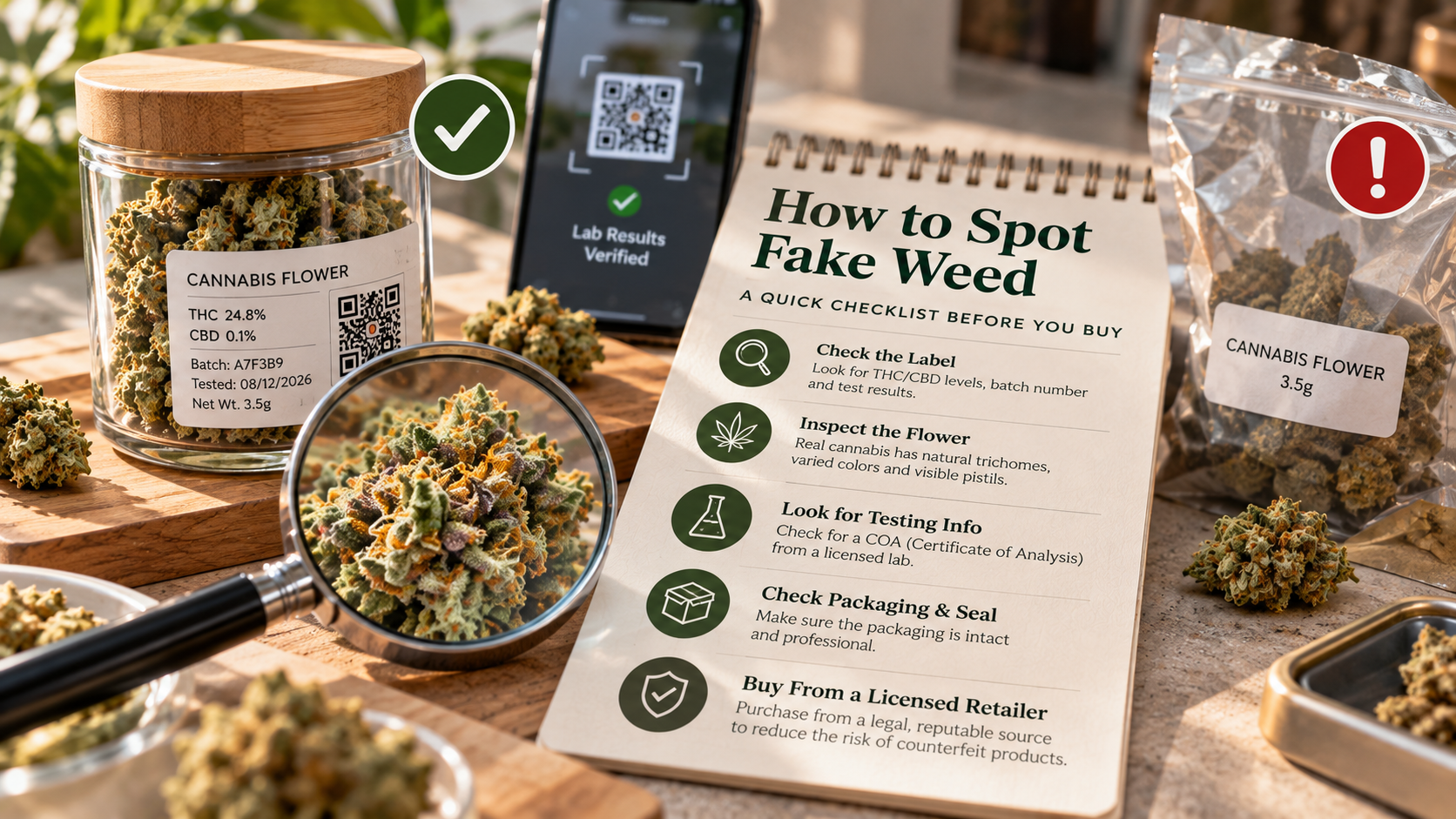
Before getting into why each of these matters, here’s the quick version:
- Look for a visible license number or verification decal at the entrance. A legitimate decal includes the store’s specific license number and, in most states, a QR code linking directly to the regulator’s database. A generic “we’re licensed” sign with no number attached isn’t verification; it’s just a claim.
- Check that the product packaging includes required state labeling, not just a brand logo. That means a state-mandated THC symbol, a license or tracking number tied to the licensed producer, and a printed cannabinoid breakdown. A nice-looking label with only a brand name and a potency claim is missing the parts that actually matter.
- Ask whether a COA is available for the specific product you’re considering. Not a general lab report for the brand, the actual batch in your hand. Staff at a licensed store should be able to pull this up in a minute, either through a QR code on the packaging or from the store’s own records.
- Notice whether pricing seems unusually low compared to nearby licensed shops. Licensed products carry the cost of mandatory testing, tax, and compliance overhead built into the price. A gap that looks too good to be true, especially at a store that also skips the other checks on this list, usually reflects skipped testing rather than a deal.
If any of these are missing or the staff can’t answer a straightforward question about testing, that’s worth treating as a signal rather than dismissing it.
How to Tell If a Dispensary Is Licensed
Every legal cannabis market maintains a public list of licensed retailers, usually searchable online through the state’s cannabis regulatory agency. New York, for example, publishes a full dispensary verification list through its Office of Cannabis Management, and licensed stores must display a verification decal, often including a QR code, near the main entrance. Scanning that code or checking the storefront address against the state’s online list takes under a minute and confirms licensing status directly from the regulator, not from anything printed on the store itself.
This step matters because a store’s appearance tells you almost nothing on its own. Clean shelving, professional signage, and a knowledgeable-sounding staff member can exist at both licensed and unlicensed locations. License verification is the one piece of information you can’t fake convincingly, since it requires matching a specific business to a specific state database entry.
Every Botanist location carries a state-issued license, verifiable through regulatory databases, and that licensing is only the starting point. Botanist’s roots go back to medical cannabis, including standing as one of the first-generation dispensaries in Connecticut’s medical program, and that background still shapes how each location operates today, from pharmacist access where state programs allow it to dedicated med-only shopping hours at select locations. Every product on the shelf is backed by a COA available on request, and staff are trained specifically to walk customers through what that lab report actually shows rather than just pointing at a price tag. That combination, licensing plus a genuine medical-market history plus staff who can answer a testing question without hesitation, is the gap between a store that happens to be legal and one built around getting the compliance and transparency pieces right from the start.
Fake Dispensary Signs Worth Noticing
A few storefront details tend to show up disproportionately at unlicensed locations, though none of them are proof on their own. Signage that avoids the word “dispensary” in favor of vaguer language like “wellness” or “CBD” while still visibly selling THC products is one pattern. Another is a missing or generic verification decal instead of the specific state-issued one. Staff who can’t clearly explain their license number or say vague things like “we’re licensed through a different program” when asked directly are a red flag.
None of these signs alone confirms a store is unlicensed. Taken together, especially alongside a failed license lookup, they’re a reasonably reliable pattern.
Is Smoke Shop Weed Legal?
This is one of the more common points of confusion, especially in states where hemp-derived products and THC products are sold under overlapping rules. Some smoke shops legally sell hemp-derived products that meet a specific low-THC threshold under federal hemp law, which is different from a licensed adult-use dispensary selling regulated THC products. The confusion happens because both categories can look nearly identical on a shelf, and not every smoke shop is clear about which category its products fall into.
If a smoke shop is selling products with THC content well above the hemp threshold without a state cannabis retail license, that’s the unlicensed activity regulators are specifically targeting. Checking a store’s license status answers this question far more reliably than judging it by the products on the shelf.
What Legal Cannabis Packaging Should Look Like
State-compliant packaging follows a specific, regulated format, and it’s one of the fastest ways to evaluate a product once you’re already inside a store. Legal packaging includes a state-required universal symbol indicating the product contains THC, a license or tracking number linking the product to a specific licensed producer, and a printed cannabinoid breakdown backed by a COA. Packaging missing these elements, or that includes only a brand name and a vague potency claim with no license number, doesn’t meet the standards licensed products must meet.
Comparing packaging side by side helps, too. A product from a licensed source will have a consistent, professionally printed label that matches the format other licensed products in that state use, since the regulator standardizes packaging requirements rather than leaving them to each brand’s design choices.
Is Unlicensed Weed Tested?
Generally, no, and this is the core safety distinction behind the entire licensed-versus-unlicensed question. Every product sold through a licensed dispensary has gone through mandatory lab testing for contaminants, including pesticides, heavy metals, and mold, along with cannabinoid potency verification. That testing is a regulatory requirement, not a marketing choice, and a licensed retailer can provide a COA documenting it.
Products sold outside that licensed system haven’t necessarily gone through any of that testing. No requirement forces an unlicensed seller to verify contaminant levels, and there’s no COA to check, since no licensed lab was involved in the first place. This is the single biggest practical difference between a licensed and unlicensed purchase, more than branding, packaging, or price. If you want a closer look at what that testing document actually covers, our guide to reading a cannabis COA breaks down each section in plain terms.
Why Is Illegal Weed Sometimes Cheaper?
Unlicensed sellers skip several cost categories that licensed retailers can’t avoid. Cannabis tax rates, mandatory lab testing fees, state licensing costs, and compliance-related overhead all factor into a licensed product’s shelf price. An unlicensed seller pays none of that, which is how they can undercut licensed pricing while still turning a profit.
That price gap isn’t a sign of a better deal. It directly reflects which costs were skipped, and testing is typically one of them. A noticeably low price relative to nearby licensed dispensaries is worth treating as a prompt to double-check licensing.
Making the Legal Choice the Easy Choice
None of this is about judging anyone who’s shopped at an unlicensed store before, especially in markets where licensed and unlicensed locations have genuinely been hard to tell apart.
The goal is just making the check itself second nature: look for the license decal, confirm it against the state’s list, ask for a COA, and treat a price that seems too good to be true as worth a second look rather than an obvious win. Once that verification habit is in place, spotting the difference between a licensed dispensary and everything else stops requiring much effort.