Ask ten dispensary shoppers what separates rosin from resin, and most will guess wrong, not because the answer is complicated, but because the two words sound almost identical while describing genuinely different production processes. That mix-up matters more now than it used to, since both terms show up constantly on vape cart packaging, not just in the dab-only corner of the concentrate case.
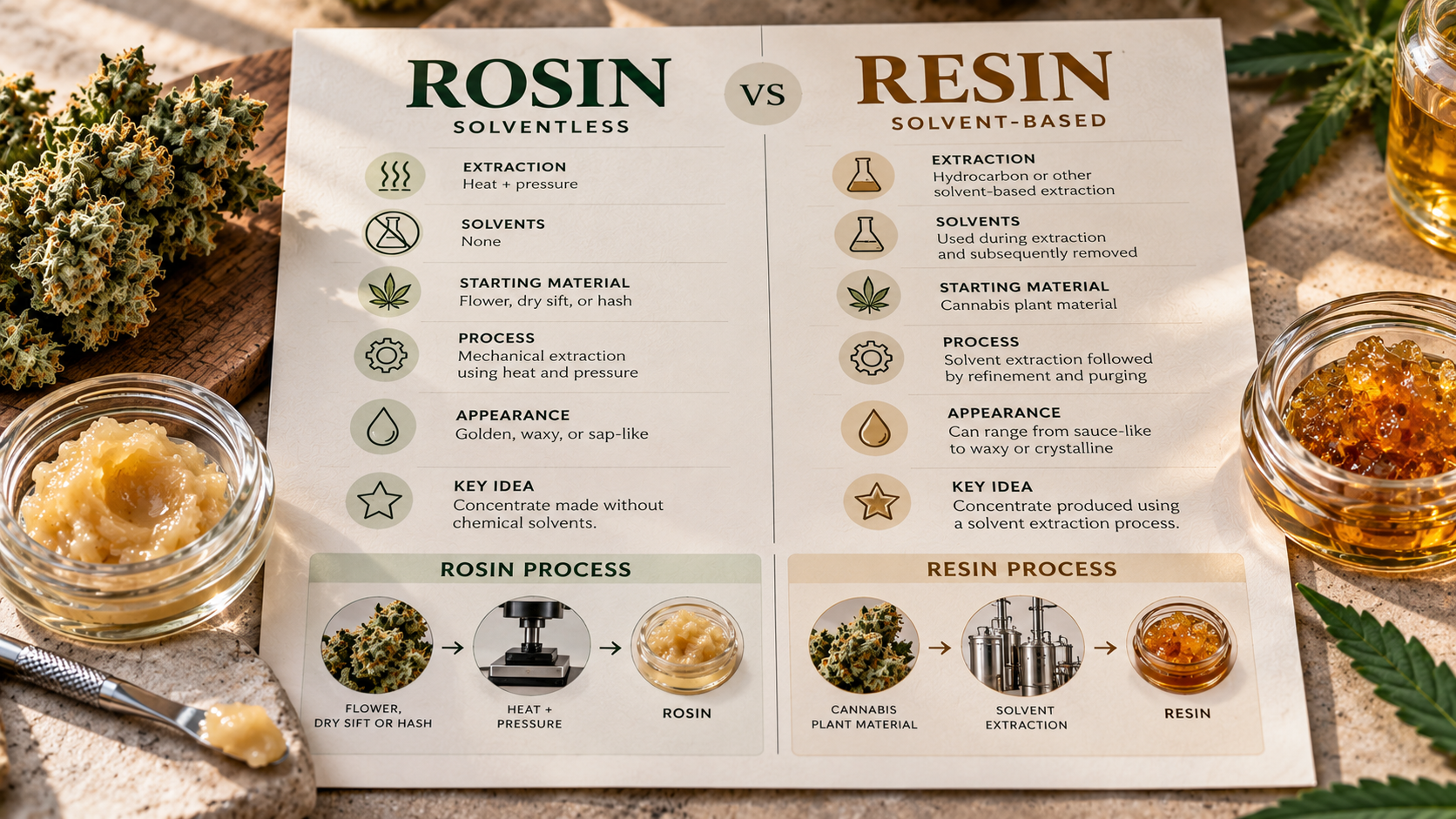
The difference between rosin and resin comes down to one variable: whether a chemical solvent touches the plant at any point. Everything else- price, texture, hardware compatibility- follows from that single distinction. Here’s what separates the two, and how that difference plays out when you’re comparing carts on a shelf.
What “Resin” Actually Means
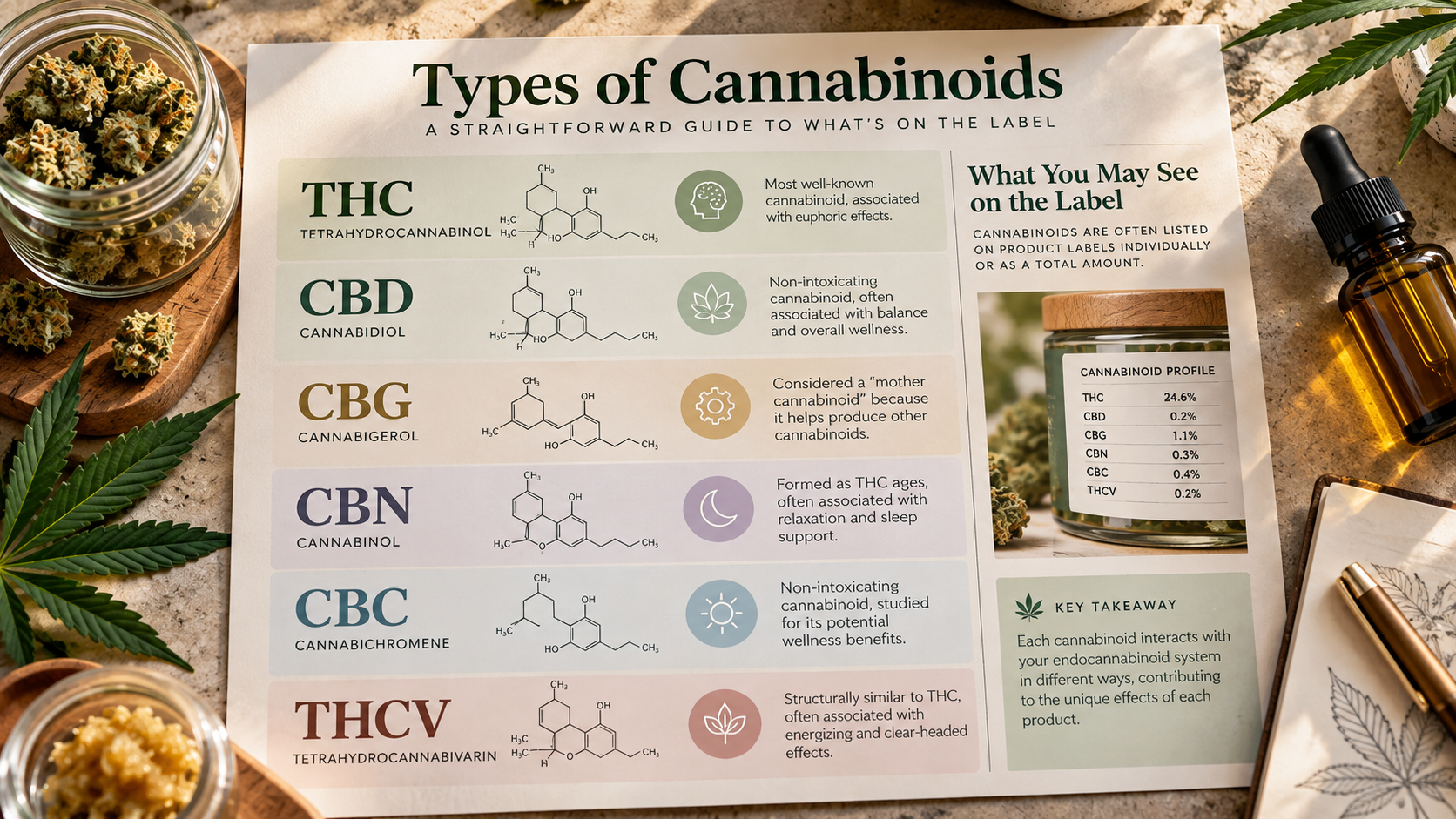
Before comparing rosin and resin as finished products, it helps to know that “resin” carries three separate meanings in cannabis. Plant resin is the sticky substance trichomes naturally produce on the flower itself, a visible marker of a bud’s chemical density. Concentrate resin refers to extracts pulled from that trichome material using a solvent. Pipe resin is unrelated to either: it’s the tar-like combustion residue that builds up inside a bowl or bong over repeated use, made of carbon and burnt plant material rather than extracted cannabinoids.
The rest of this guide is about the second meaning, concentrate resin, since that’s the one shoppers actually compare against rosin at the counter.
What Is Resin? The Solvent-Extraction Side
Resin, in the concentrate sense, is made by washing cannabis plant material with a hydrocarbon solvent, typically butane, propane, or a blend of both. The solvent dissolves cannabinoids and terpenes from the trichomes, and the solution then goes through a purge cycle using gentle heat and vacuum pressure to remove the solvent from the final product. Licensed producers must have that finished resin lab-tested for residual solvent content before it reaches a shelf, with results reported on the product’s COA.
Live resin specifically starts from fresh-frozen flower rather than dried and cured flower. Skipping the drying step preserves a larger share of the plant’s original terpene content, since terpenes are volatile compounds that evaporate steadily during standard curing. That’s why live resin tends to carry a noticeably fuller aroma profile than resin made from cured material.
What Is Rosin? The Solventless Side
Rosin skips solvents entirely. Instead, cannabis flower, hash, or kief gets pressed between two heated plates under significant mechanical pressure, and that combination physically forces resinous material out of the trichomes without any chemicals involved at any stage. Commercial rosin presses typically run between 160°F and 220°F, with the exact temperature adjusted based on the starting material and the texture a producer is aiming for.
Live rosin follows the same fresh-frozen starting point as live resin, but instead of a solvent wash, the frozen flower first goes through an ice water extraction to produce bubble hash, which is then dried and pressed. That multi-step process—ice water separation followed by freeze-drying and pressing—is considerably more labor-intensive than solvent extraction. Furthermore, because it starts with wet, fresh-frozen biomass, the process typically yields only 3% to 6% usable rosin by weight of the starting material. That massive yield gap and labor requirement are the main reasons live rosin consistently costs more per gram than resin on dispensary shelves.
The Difference Between Rosin and Resin in Vape Carts
Most shoppers today encounter rosin and resin in cartridge form rather than as a dab-only product, and the underlying rosin vs. resin distinction still applies once that oil is loaded into a cart. A distillate cart contains highly refined, single-cannabinoid oil with terpenes typically blended back in afterward to thin it out. A live resin cart contains solvent-extracted oil retaining a broader share of the plant’s original cannabinoid and terpene profile. A live rosin cart contains solventless oil that preserves the plant’s natural matrix, including its native cannabinoids, terpenes, and trace plant lipids.
That chemical makeup has a real hardware consequence. Because live rosin contains fragile, unrefined natural plant elements rather than isolated compounds, it is much more sensitive to temperature. Rosin carts perform best on devices with adjustable, lower-voltage settings (typically 1.8V to 2.5V). Excess heat can easily scorch the delicate terpenes and natural lipids in rosin before they can vaporize cleanly, altering the flavor and creating residue blockages.
Distillate and standard resin carts tend to tolerate a wider voltage range without issue. If a rosin cart seems to clog or pull slowly, check the device’s voltage setting before assuming there’s a problem with the cart itself. Lowering the voltage is often all it takes to get consistent airflow and prevent the oil from burning.
Flavor and Terpene Content
Both rosin and resin are considerably more terpene-rich than standard distillate, and the flavor gap between them comes down largely to processing gentleness. Ice water extraction and pressing expose the plant material to less mechanical and chemical disruption than a solvent wash does. This gentle approach is why rosin is often described as carrying the most true-to-plant aroma of any concentrate category.
Resin, particularly live resin, still tests high for terpene content and delivers a distinct, strain-specific aroma profile of its own. In practice, the starting flower quality affects the final aroma at least as much as the extraction method does.
Why Rosin Costs More Than Resin
The price gap between rosin and resin reflects genuine production economics rather than marketing hype. Solvent extraction scales incredibly efficiently: a closed-loop hydrocarbon system can process a massive batch of biomass with comparatively little manual labor per gram of output.
Rosin production doesn’t scale the same way. The ice water wash step alone is highly labor-intensive, and the low yield ratio from pressing means a producer needs several times more starting material to end up with the same amount of finished product. That combination of intensive manual labor and lower yields is baked directly into rosin’s higher shelf price.
Reading the COA: What Solvent Testing Confirms
Every legal resin product must pass residual solvent testing before sale, with results listed on its Certificate of Analysis (COAs) alongside cannabinoid and terpene data. A passing result means the product tested well below the state’s legal action level for that solvent—a threshold set specifically to confirm the vacuum purge process worked exactly as intended.
Rosin skips this testing category entirely since no chemical solvent was ever introduced to the plant material. This is a meaningful production distinction, even though both product types, when properly tested and purchased through a licensed dispensary, meet the same strict safety standards.
Choosing Between Rosin and Resin
The decision mostly comes down to your personal budget and your hardware capabilities rather than one category being universally “better” than the other.
- Choose Rosin if: Solventless production matters to you specifically, you want the most authentic plant flavor, and you already own a vape battery with low, adjustable voltage settings.
- Choose Resin if: You want a vibrant, strain-specific terpene profile at a more accessible price point, and you are entirely comfortable with lab-verified solvent extraction.
Understanding the difference between rosin and resin mostly just means knowing which questions to ask at the counter, and the answers are printed right there on the label. If you need help, our staff can walk you through terpene profiles, hardware compatibility, and the testing information for each option so you can find a cart that fits your routine.