A clinical trial published in JAMA Psychiatry gave 15 participants a full-spectrum CBD product for four weeks, and seven of them later tested positive for THC on a standard urine drug screen. Every product used in that study was legal, hemp-derived, and compliant with federal THC limits. That result surprises a lot of people, and it’s exactly why understanding full spectrum vs broad spectrum CBD matters beyond just picking whichever bottle looks nicer on a shelf.
The difference between these two categories, plus a third option called isolate, comes down to which compounds remain in a product and which are stripped out during processing. That distinction affects a lot more than marketing language. It affects what shows up on a lab test, what a product actually contains chemically, and which option fits a specific situation.
What Is Full Spectrum CBD?
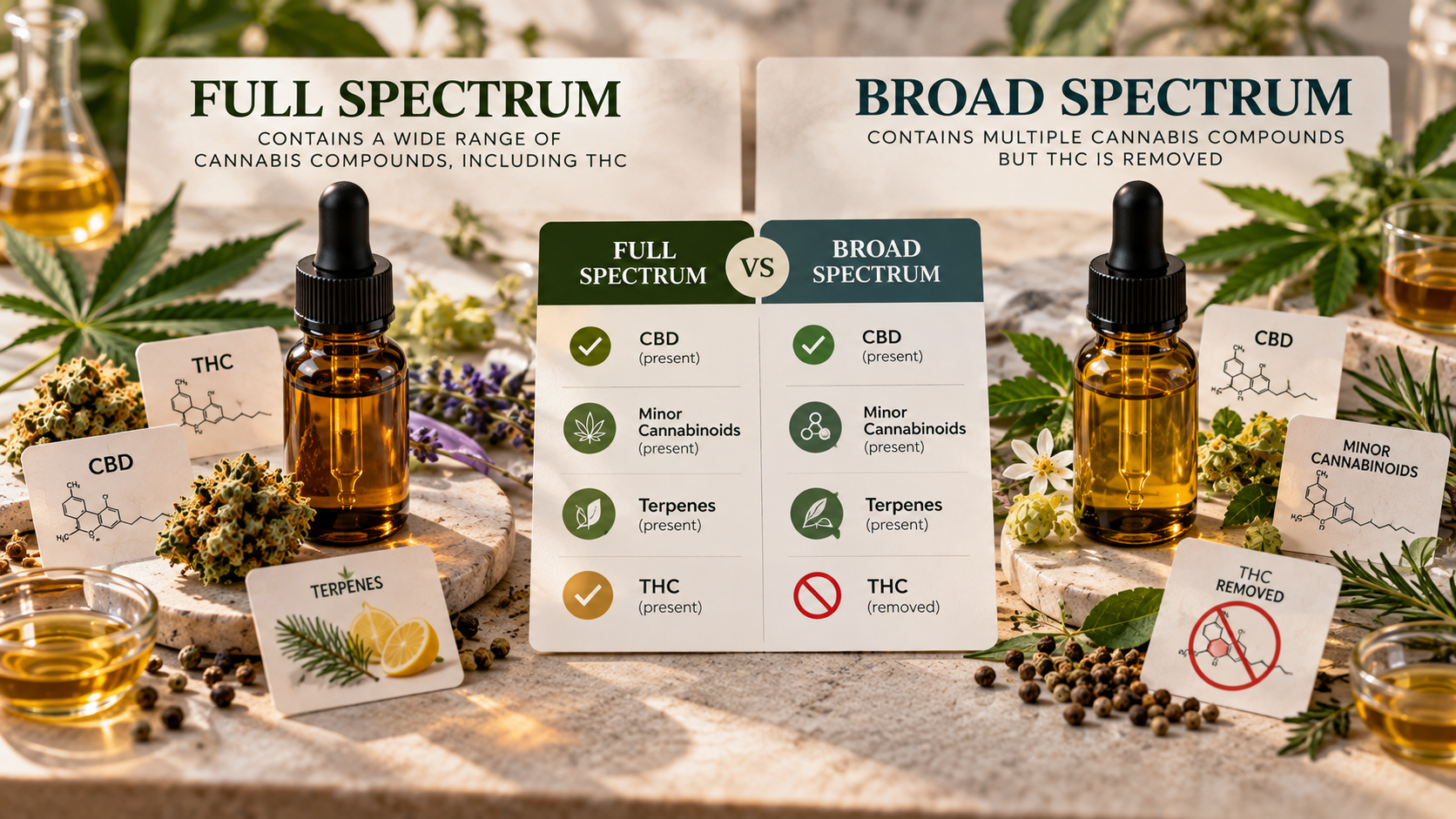
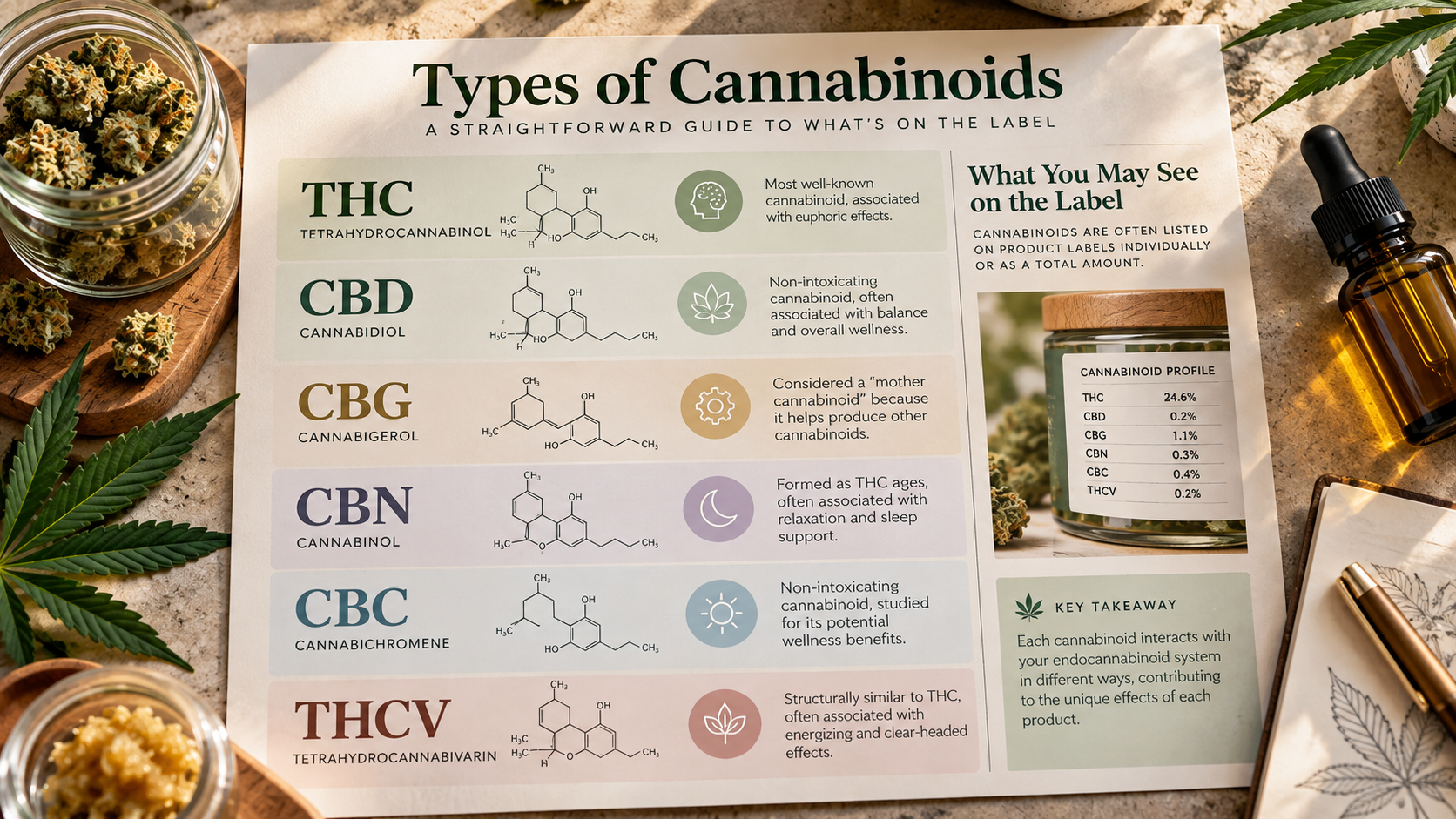
Full spectrum CBD retains the broadest range of compounds naturally found in the hemp plant. Alongside CBD itself, a full spectrum extract typically includes minor cannabinoids like CBG and CBN, terpenes, flavonoids, and trace THC, all carried through extraction together rather than isolated and removed. Because nothing gets filtered out beyond the initial extraction process, full spectrum products most closely resemble the plant’s original chemical composition.
That trace THC is legally capped. Under the federal hemp exemption established by the 2018 Farm Bill, a hemp-derived product can contain no more than 0.3 percent THC by dry weight and still qualify as a legal hemp product rather than a controlled cannabis product. Full spectrum CBD sits right at the edge of that legal definition, retaining THC specifically because it stays under that regulatory line rather than because it’s been added deliberately.
What Is Broad Spectrum CBD?
Broad spectrum CBD starts from the same full-plant extraction as full spectrum, but goes through an additional processing step specifically to remove THC. The minor cannabinoids, terpenes, and flavonoids generally stay intact, so a broad spectrum product retains a fuller compound profile than a single-cannabinoid product while eliminating the compound most consumers are trying to avoid.
That additional processing step isn’t always perfect. Removing THC completely, down to a level that no testing method could ever detect, is technically difficult, which is why some broad spectrum products carry incidental trace amounts even after processing. A reputable broad spectrum product will confirm on its COA whether THC came back as truly non-detectable or just below a specific reporting threshold, and that distinction is worth checking rather than assuming.
CBD Isolate: The Third Option
CBD isolate is the most stripped-down category. Through additional purification steps, isolate removes everything except CBD itself, leaving a crystalline or powder form that’s typically 99 percent pure CBD with no other cannabinoids, terpenes, or flavonoids present. Comparing full spectrum vs broad spectrum vs isolate essentially comes down to how much of the plant’s original compound diversity survives processing: full spectrum keeps the most, isolate keeps the least, and broad spectrum sits in between.
A Quick Comparison Chart
| Full Spectrum | Broad Spectrum | Isolate | |
| Contains THC | Yes, up to 0.3% | Typically removed; trace amounts possible | No |
| Minor cannabinoids (CBG, CBN, etc.) | Yes | Yes | No |
| Terpenes and flavonoids | Yes | Yes | No |
| Drug test risk | Highest | Low but not zero | Lowest |
| Common formats | Tinctures, gummies, topicals | Tinctures, gummies, topicals | Tinctures, capsules |
Does Full Spectrum CBD Contain THC?
Yes, by definition. That’s the core distinction in the full spectrum vs broad spectrum comparison: full spectrum retains THC within the legal 0.3 percent threshold, while broad spectrum is specifically processed to remove it. A product can only be legally labeled and sold as full spectrum hemp-derived CBD if that THC content stays under the federal limit, which is confirmed through lab testing and listed on the product’s COA alongside every other cannabinoid present.
Will Full Spectrum CBD Make Me Fail a Drug Test?
This is the most practical question in the full spectrum vs broad spectrum decision, and the honest answer is that it’s a real possibility, not just theoretical. The JAMA Psychiatry study referenced earlier gave participants a full-spectrum product containing 0.02 percent THC by volume, well under the legal 0.3 percent threshold, three times daily for four weeks. Nearly half tested positive for THC afterward. The researchers specifically noted that it’s often wrongly assumed hemp-derived products will always produce a negative drug test result, and their findings didn’t support that assumption.
The mechanism behind this comes down to accumulation. THC and its metabolites can build up gradually with repeated exposure, even when each dose stays well under the legal 0.3 percent product threshold, and standard drug tests are sensitive enough to detect that buildup over time. Someone using a full spectrum product occasionally faces a different risk profile than someone using the same product daily for weeks. For anyone who’s subject to regular drug testing through employment or another program, broad spectrum or isolate products eliminate this risk far more reliably than full spectrum does.
Does Full Spectrum CBD Have Psychoactive Effects?
The 0.3 percent THC threshold that defines legal hemp products is a compositional and legal boundary, not a claim about what a product does once consumed. What it confirms is chemistry: a specific, lab-verified upper limit on THC content, checked the same way any other cannabinoid gets checked, through third-party testing reported on a COA. Reading that lab result is the most direct way to know exactly what a specific product contains, rather than relying on the “full spectrum” or “broad spectrum” label alone.
Which Is Better, Full Spectrum or Broad Spectrum?
Neither option is universally better, since the right choice depends entirely on the situation. Drug testing is the clearest deciding factor: anyone facing regular testing, whether through an employer, an athletic program, or a legal requirement, has a meaningfully lower risk profile with broad spectrum or isolate than with full spectrum. Budget also plays a role, since full spectrum extraction generally involves fewer processing steps than broad spectrum, which can make it more accessible at a given price point.
For consumers who specifically want the broadest possible range of naturally occurring plant compounds and aren’t concerned about trace THC, full spectrum delivers the most complete compound profile of the three categories.
For consumers who want that same broader compound profile, terpenes and minor cannabinoids included, without any THC exposure, broad spectrum is the more direct match.
Isolate remains the simplest, single-compound option for anyone who wants CBD specifically and nothing else. If you’re still building a foundation on how CBD and THC relate chemically, our guide to the types of cannabinoids is a useful starting point before comparing specific products.
How to Confirm What’s Actually in the Bottle
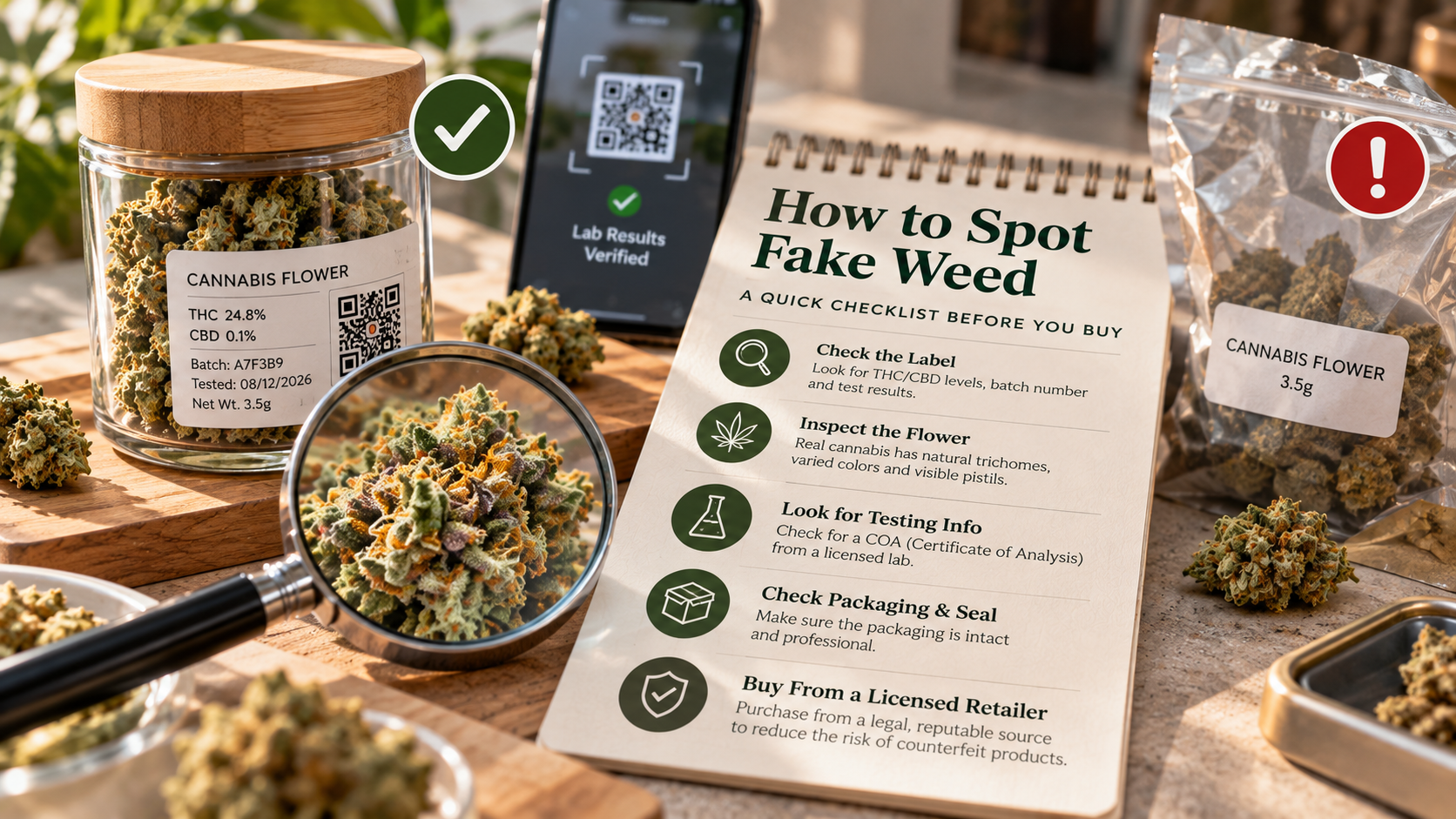
Label language alone isn’t always reliable, since “full spectrum” and “broad spectrum” aren’t defined or enforced consistently across every brand and market. The COA is the actual source of truth. A legitimate COA lists every cannabinoid detected, including THC, down to a specific percentage or milligram amount, along with terpene content and safety testing results.
Checking that document takes a minute and answers the full spectrum vs broad spectrum question definitively for any specific product, rather than relying on a label term that can vary in how strictly it’s applied from one brand to the next.